
“Everyone needs a coach. It doesn’t matter whether you’re a basketball player, a tennis player, a gymnast or a bridge player.”
The best online mixing course for self-taught beginners is Mix Elite’s Full Mixing from Start to Finish course: $97, paid once, with lifetime access and a 60-day money-back guarantee. Its 44 self-paced video lessons (6+ hours) teach volume, EQ, compression, effects and automation, then mix a trap song and a house song from scratch, vocals included. The best free option is Mix Elite’s free How To Mix For Beginners class on YouTube.
Your beat sounds great in your headphones. Then you play it in the car, and the kick disappears, the vocal floats on top like a sticker, and everything turns to mud the moment the bass comes in.
That’s usually when people start shopping for a mixing course, and it’s when the choice gets confusing. Some are hours of famous engineers working on hit records. Others are monthly plans with one mixing class buried inside. We checked every price below on October 11, 2026, and judged each course by one test: will it help you mix your own songs?
Table of Contents
What are the best mixing courses online for beginners?
Mix Elite’s Full Mixing from Start to Finish course is the best mixing course online for beginners and self-taught home producers. It costs $97, paid once, with lifetime access. Its 44 lessons teach volume, EQ, compression and space, then mix a trap song and a house song from scratch, vocals included.
It’s made by Mix Elite, the school behind the Mix Elite | FL Studio Tips YouTube channel, and there’s no monthly fee.
What sets it apart is how it’s built. Plenty of mixing lessons explain the tools one at a time, and YouTube tips give you pieces of a mix. This one teaches the tools in the order you use them. Then you watch two full songs get mixed from start to finish, with every step explained: a trap song with rap vocals and a house song with vocals.
Full disclosure: Mix Elite makes this page and this course. That’s why every other price here comes from the seller’s own site, checked on the same day.
Best for: beginners and home producers who can already make a beat and want it to sound finished. Brand new to FL Studio? The course page says to start with the FL Studio Beginner Accelerator and then come back to this one.
What you learn, module by module
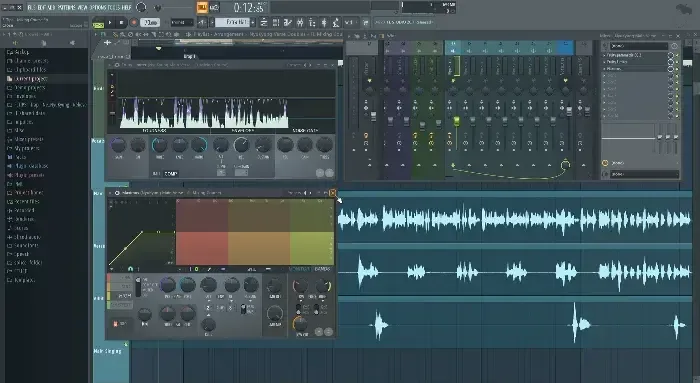
The 44 video lessons sit in 7 modules. The first four teach the tools, and the last three are the two full mixes:
- Your room and acoustics (1 lesson): why your room changes what you hear, plus the plan for all 7 modules.
- Volume and EQ (2 lessons): what tutorials often leave out about mixing, and how to balance the volume of every part.
- Clean-up and compression (3 lessons): cleaning up the mud with EQ, how compression works, and parallel compression on the drum bus.
- Effects, space and automation (6 lessons): sidechain, reverb and delay that stay clean, panning, mono and stereo, an 808 and kick trick, and automation on the master for more impact.
- The trap song (10 lessons): the main rap vocal, the doubles, the ad-libs and a sung breakdown, all mixed inside a full song.
- The house song (14 lessons): a club-ready instrumental with lots of layers, from the kick and sub to the plucks, the ear candy (small extra sounds) and the build-up.
- The house vocals (8 lessons): the full vocal chain with shortcut presets, and how to build a big vocal from one sample.
You can hear the result before you buy. The course page has a before-and-after player for both songs, so you can flip between the raw version and the finished mix.
What you get for 97 dollars
- 44 video lessons, 6+ hours in total, plus 11 short quizzes
- An Official Mixing Certificate when you pass the final test
- Lifetime access on your phone, tablet or computer
- A 60-day money-back guarantee: email support or use live chat and you get every cent back
You also get these bonus files for FL Studio: both songs before and after the mix, plus a ready mixer setup for your own songs.
- FLPTrap song, unmixedbefore
- FLPTrap song, mixedafter
- FLPHouse song, unmixedbefore
- FLPHouse song, mixedafter
- FLPUltimate Mixing Blueprintready mixer setup
- FSTMixer channel presetsfor new songs
The lessons are shown in FL Studio with its stock plugins plus a couple of free ones. You also see what the best paid plugins can do, but you don’t need them. The page says every step works the same in Ableton, Logic, Cubase and other DAWs (the music programs producers use), and the bonus project files open in FL Studio 20 or newer.
What’s the best free mixing course?
The best free mixing course is Mix Elite’s free How To Mix For Beginners class on YouTube. In about 84 minutes, it mixes a full house track with FL Studio’s stock plugins in four steps: volume, EQ, compression and space.
It’s taught by Max, the founder of Mix Elite, and it’s a real lesson rather than a teaser. You can watch it right here.
The four steps are the Holy Quad, Mix Elite’s mixing formula: volume, EQ, dynamics (compression) and space, always in that order, whatever music you make. In Max’s words: “Whatever style you produce, please follow along. The process is always exactly the same.” Here’s how each step works.
Step 1: Get the volume right
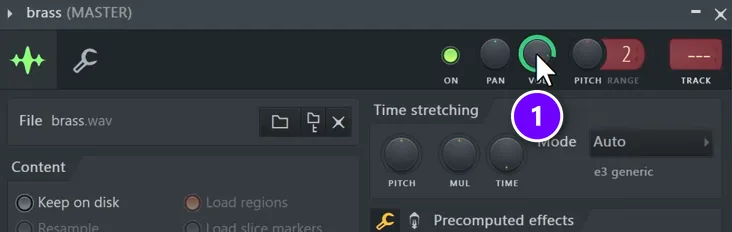
Start by turning down what’s too loud. Double-click a sound to open its channel settings, then turn the volume knob (1) down. Begin with background parts like the strings, the brass and the crashes, and keep your drums and your main sound the loudest. Don’t boost them. Lower everything else.
Can’t tell which part is too loud? Mute them one at a time and listen. If the song sounds better without a part, Max’s advice is to delete it, even after two hours of work on it.
Step 2: EQ, cut first and boost gently
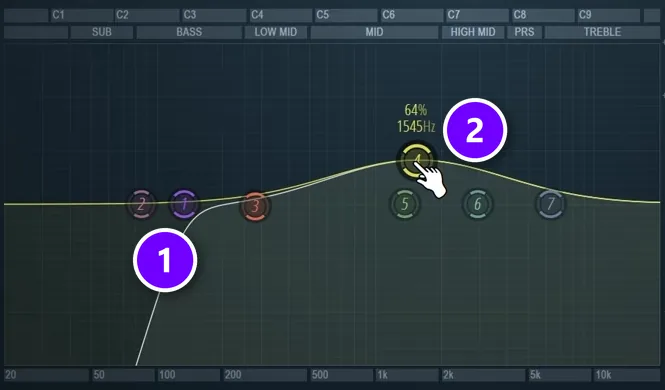
EQ (equalization) turns frequency ranges up or down. In Fruity Parametric EQ 2, switch band 1 to a low cut (1) on every bass layer except one, so only one sound plays the sub, the deep low end you feel more than you hear. Then add a small boost where a layer needs a little more midrange (2).
The rule for boosts is simple. “I would never suggest boosting anything over about 6 dB since it’s much better and you’ll end up with a cleaner mix if you instead attenuate and remove what’s wrong instead of trying to boost what’s good,” Max says.
Check every EQ move with the whole song playing. A sound that seems harsh on its own can sound great in the mix, and your listeners will only ever hear the full mix.
Step 3: Compression, start with threshold and ratio
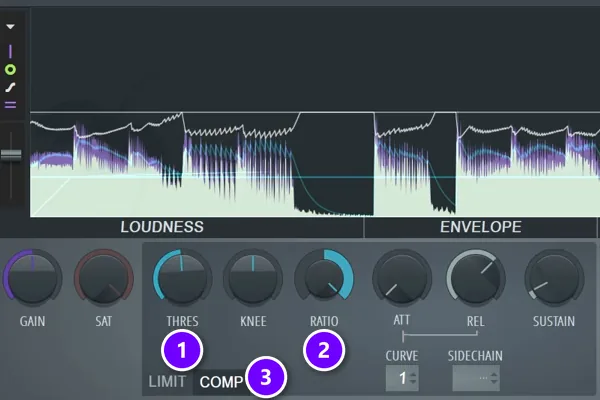
A compressor turns down the loud peaks so a sound feels steady. The class uses Fruity Limiter in COMP mode (3) because you can see what it does: the purple part of the waveform is what got turned down. Two knobs matter at first: the threshold (1), where the compressor steps in, and the ratio (2), how hard it pushes back.
In this frame the ratio is pushed to 20:1 to show what limiting looks like. For normal compression, set the ratio between 2:1 and 4:1, and aim for about 3 to 4 dB of reduction on the drum group. The class also sidechains the bass to the kick, so the bass ducks by about 7 to 10 dB each time the kick hits.
Don’t worry if this step feels slow. “Compression takes the longest to learn and the longest to learn how to hear where the sound should be compressed or not,” Max says. It’s the step where watching someone mix a real song helps the most.
Step 4: Space, with reverb and panning
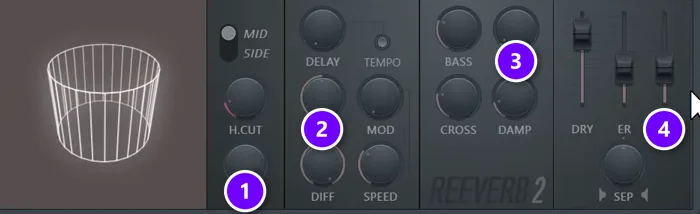
Space is what makes a mix feel deep and wide. On the clap, open Fruity Reeverb 2, raise the low cut (1) to about 700 Hz so the lows stay dry, turn the size (2) up and shorten the decay (3) to about 1 second. Then raise the wet fader (4) only until you can hear it.
Panning places a sound left or right. Pan the shakers about 10% left and the hat about 10% right, so the percussion surrounds you instead of piling up in one ear.
The free class mixes one instrumental. In the paid course you watch two full songs with vocals get mixed in the same order, volume and EQ first, then compression, then effects and space, and you get the project files of both to mix along. For the whole process in writing, read our guide on how to mix a song.
What if you want feedback on your own mixes?
Get a pro to listen to your own song. Mix Elite Academy includes unlimited 1:1 feedback on your music and weekly live coaching calls, plus this mixing course, for 3 payments of $137 with lifetime access. Lessons show you the steps, and a pro’s ears tell you what to fix next.
You also get 600+ trainings in all, including mixing masterclasses of over 6 hours, live calls in small groups 1-3 times a week, and a private community. It comes with the same 60-day money-back guarantee.
Already bought the mixing course? The course page says to ask support for your personal discount on the Academy.
Other mixing courses worth a look
Here’s what else is worth your time, from university classes to ear training. Read the price lines closely: most of these are subscriptions, so the yearly total matters more than the monthly number. For schools and full production courses, see our guide to the best online music production courses.
Coursera: Berklee and GRAMMY GO classes
Best for: people who want a university-style class on how the tools work.
In The Technology of Music Production, Berklee’s Loudon Stearns covers the mixer, dynamic effects like compressors, and filter and delay effects, along with sound, your DAW and synthesis. Coursera lists 6 modules at a beginner level, about 2 weeks at 10 hours a week, and a 4.8 rating from 1,087 reviews.
For a class that’s only about mixing, GRAMMY GO’s Mixing and Completing Your Music Production with Carolyn Malachi has 4 modules and takes about 7 hours, also at a beginner level.
Price: single classes and programs cost $49 to $79 a month. Coursera Plus opens 10,000+ classes for $59 a month or $399 a year.
Udemy: The Complete Mixing Masterclass

Best for: people who want a long reference course they own, in any DAW.
J. Anthony Allen, a university music professor, teaches The Complete Mixing Masterclass in Ableton Live, but he set it up so it works in any DAW. It has 107 lectures and runs 7 hours 38 minutes, from balance, panning and EQ to reverb and delay. It’s rated 4.4 from 3,194 ratings and was last updated in May 2026.
Price: $89.99 on October 11, 2026, with no sale running, paid once. Udemy’s refund policy gives you 30 days on most purchases.
Skillshare: Young Guru’s mixing class
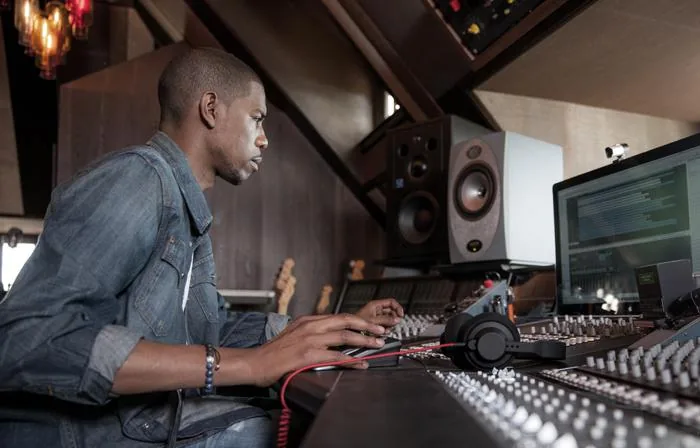
Best for: a short, friendly first look at how a top engineer thinks.
Young Guru, the Grammy-nominated engineer known for his work with Jay Z, teaches Learn How to Mix Music with Young Guru. It’s 7 lessons and 52 minutes on organizing a mix, setting levels, EQ, reverb, compression and tonal balance. He gives you a raw audio file, so everyone mixes the same track.
Price: a Skillshare membership is $167.88 a year, which works out to $13.99 a month, paid up front. It opens every class on the site.
Mix With The Masters: watch famous engineers work
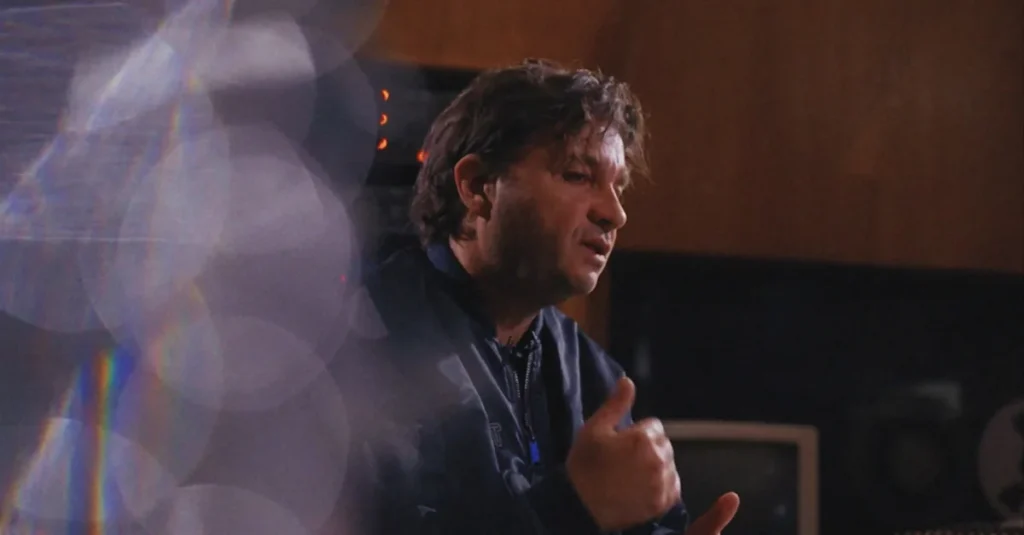
Best for: producers who know the basics and want to see how hit records get made.
Mix With The Masters films well-known producers and engineers breaking down real records in their own studios. In one series, engineer Renaud Letang builds an all-analog mix of Feist’s “One Evening” from scratch. Its Pro plan opens the full catalog of 200+ video series, plus an online community and deals on gear.
Price: Pro is $29.90 a month or $319 a year on its pricing page, and Expert is $649 a year. Students get reduced rates.
Produce Like A Pro Academy: practice on real multitracks
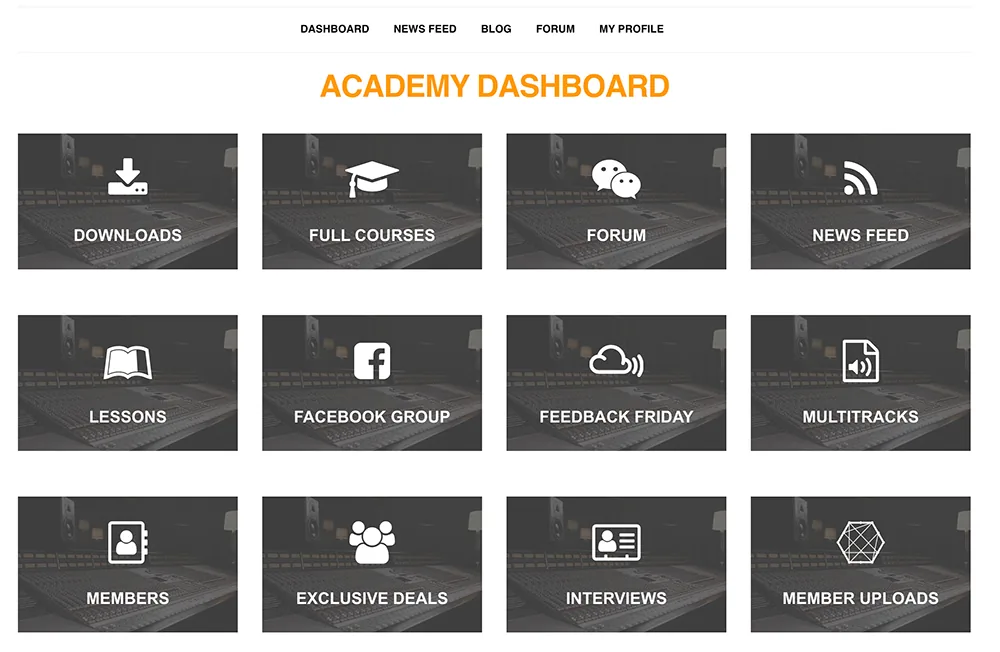
Best for: people who record bands and want real multitracks to practice on.
Warren Huart’s Produce Like A Pro Academy includes 20 full mixing courses from industry pros, 200+ sets of multitracks (the separately recorded parts of a song), a 12-week mastering course and a community. On Feedback Friday, Warren reviews members’ mixes.
Price: $99 a year on October 11, 2026, marked down from $199, and you can cancel anytime. There’s a 30-day money-back guarantee.
Soundfly: Faders Up I
Best for: songwriters and bandleaders who like a guided course with a clear plan.
Faders Up I: Modern Mix Techniques is a six-week guided course built on interviews with top sound engineers, including people who’ve worked with Beyoncé and D’Angelo. It covers referencing, level, pan, EQ, compression, reverb and delay, and a second part goes further for advanced mixers.
Price: a Soundfly membership is $12 a month or $96 a year and opens all of its courses. You can cancel anytime.
SoundGym: ear training for mixing
Best for: training your ears next to any course on this list.
SoundGym isn’t a course. It’s a set of short daily games that train you to hear frequency, compression, panning and space, about ten minutes a day. A free account gets short 3-game workouts, and Pro opens all 21 games and full 5-game workouts.
Price: free to start. SoundGym shows its Pro prices after you sign in.
Are paid mixing courses worth it, or is free YouTube enough?
Free YouTube lessons are enough to learn what each tool does, and Mix Elite’s free 84-minute mixing class covers the whole process. A paid course is worth it when you want the right order, whole songs mixed from start to finish and project files to practice on, which is what Mix Elite’s $97 mixing course adds.

Where free videos fall short is order. One video shows an EQ trick, the next one a vocal chain, another one says the opposite of the last, and nobody shows you how it all fits into one song.
A playlist gives you none of those three. Mixing is mostly ear training, so it helps to watch the same moves happen on real songs, again and again, until you start to hear them yourself.
Stuck on a mix right now? Our list of beginner mixing mistakes covers the problems that come up most. You don’t need expensive plugins to start, either: Mix Elite’s free class mixes a whole track with FL Studio’s own plugins, and our guide to the best free mixing plugins covers the rest.
How do you choose a mixing course if you’re short on time?
Pick a self-paced course that mixes whole songs in order and gives you the project files, so each evening you can watch one lesson and try that step on the same song. Mix Elite’s $97 mixing course works this way, with 44 lessons, 6+ hours in all, and both songs to mix along.
Before you pay for any online mixing course, run it through these seven checks.
- Does it mix whole songs? Watching one full song go from rough to finished teaches you the order, and the order is most of the skill.
- Can you follow along in your DAW? EQ, compression and reverb work the same everywhere, but it’s easier when the teacher uses your program. If you’re set on FL Studio, compare the best FL Studio courses too.
- Do you get the project files? Mixing the same song as the teacher lets you compare your mix with theirs, and you never lose an evening hunting for something to practice on.
- Does it cover vocals? Most songs have them, and vocals are where a home mix usually gives itself away.
- What’s the real yearly cost? Add up twelve months of a monthly plan before you compare it with a one-time price.
- How long is the refund window? Look for enough time to try a few lessons on your own song.
- Can you get feedback on your own mix? Lessons teach the steps. A pro’s ears tell you what to fix next.
Watch the billing, not just the monthly price. Skillshare lists $13.99 a month, but you pay $167.88 for the whole year up front.
Every mixing course side by side
Here’s the whole price check in one place, as of October 11, 2026.
| Course | Best for | Price | How you pay |
|---|---|---|---|
| Mix Elite Full Mixing from Start to Finish. | Beginners and home producers who can make a beat. | $97. | Once, lifetime access. |
| Mix Elite Academy. | Feedback and coaching on your own music. | 3 payments of $137. | Lifetime access. |
| Mix Elite’s free mixing class on YouTube. | A free first lesson. | Free. | Free. |
| Coursera (Berklee, GRAMMY GO). | University-style classes. | $49 to $79 a month. | Monthly, or $399 a year for Coursera Plus. |
| Udemy: The Complete Mixing Masterclass. | A long reference course in any DAW. | $89.99 with no sale on. | Once. |
| Skillshare: Young Guru. | A short first look. | $167.88 a year. | Yearly, paid up front. |
| Mix With The Masters. | Watching famous engineers work. | $29.90 a month or $319 a year. | Monthly or yearly. |
| Produce Like A Pro Academy. | Practicing on real multitracks. | $99 a year on sale. | Yearly, cancel anytime. |
| Soundfly: Faders Up I. | A guided six-week course. | $12 a month or $96 a year. | Monthly or yearly. |
| SoundGym. | Ear training games. | Free to start. | Pro price shown after you sign in. |
FULL MIXING FROM START TO FINISH
Make your mixes sound clean and finished
44 video lessons (6+ hours) teach volume, EQ, compression, effects and automation, then show a trap song and a house song mixed from scratch, vocals included, with the project files of both. It’s $97, paid once, with lifetime access and a 60-day money-back guarantee.
Frequently asked questions
What is the best online mixing course for beginners?
Mix Elite’s Full Mixing from Start to Finish course is the best online mixing course for beginners who can already make a beat. It’s $97, paid once, with lifetime access and a 60-day money-back guarantee. Its 44 self-paced lessons (6+ hours) teach the core tools, then mix a trap song and a house song from scratch, vocals included, with the project files of both.
Are paid mixing courses worth it, or is free YouTube enough?
Free YouTube lessons teach what each tool does, and Mix Elite’s free How To Mix For Beginners class mixes a full track in about 84 minutes. A paid course is worth it when you want a set order, whole songs mixed from start to finish and project files to practice on. Mix Elite Academy adds a pro’s feedback on your own mixes.
How do you choose a mixing course if you only have an hour or two a night?
Pick a self-paced course you can pause and rewatch, with whole songs mixed in order and the project files to practice on, so every evening you can watch one lesson and try it on the same song. Skip anything that needs expensive plugins. Mix Elite’s $97 mixing course fits: 44 lessons and 11 short quizzes, 6+ hours in all.
Can you learn mixing online for free?
Yes, you can learn the basics for free. Mix Elite’s free class on YouTube mixes a full house track in about 84 minutes with FL Studio’s own plugins, in four steps: volume, EQ, compression and space. SoundGym’s free account trains your ears with short daily games. A paid course adds a set order, full songs with vocals, and project files to follow along with.
Do you need paid plugins to learn mixing?
No. Mix Elite’s mixing course is shown in FL Studio with its stock plugins plus a couple of free ones. It also shows what the best paid plugins can do, but you don’t need them. Mix Elite’s free class mixes a whole track with FL Studio’s own Fruity Parametric EQ 2, Fruity Limiter, Fruity Reeverb 2 and Fruity Delay 3. Spend on lessons first and plugins later.