

“Always leave space for God to walk into the room.”
The best EQ plugin overall is FabFilter Pro-Q 4 ($199). The best free one is TDR Nova, and if you use FL Studio, the Fruity Parametric EQ 2 you already have is the best to learn on. The best analog EQ is Universal Audio’s Pultec Passive EQ Collection ($149 list, $39 on sale on October 12, 2026).
Every sound in your mix fights for the same space, and the best EQ plugins are how you settle that fight. The kick and the 808 crowd the low end, the vocal gets buried under the synths, and turning things up only makes the mess louder. EQ gives each sound its own room.
We checked every price, and whether each plugin is free or paid, on the maker’s own website in October 2026. Below are 11 picks in three groups: the EQ built into FL Studio, clean digital EQs, and analog-style EQs that add warmth, plus one smart tool for harsh sounds. Sale prices change fast, so check before you buy.
Table of Contents
What does an EQ plugin do?
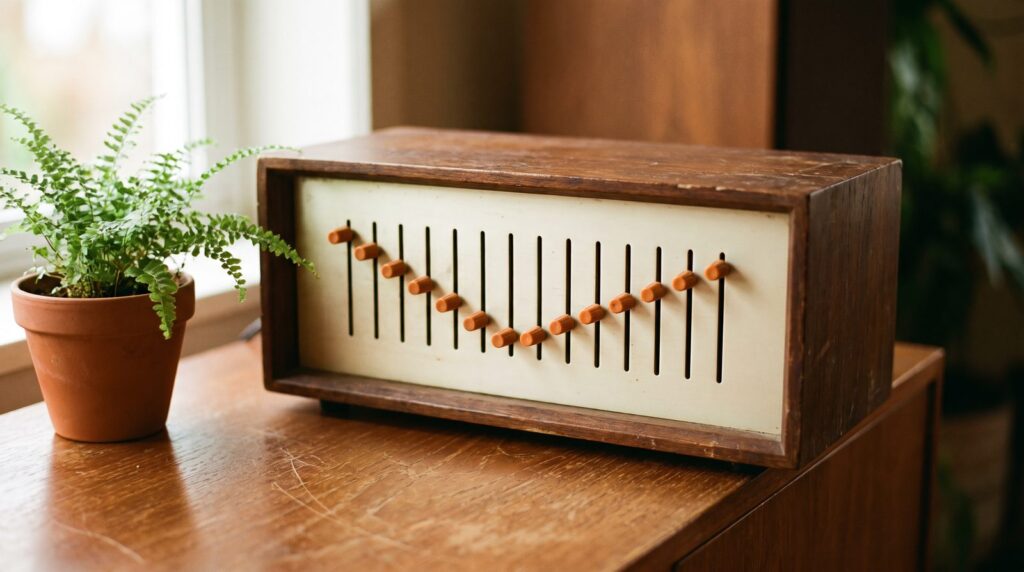
Max, the founder of Mix Elite, puts it simply: “An equalizer works as a volume knob, but for specific frequencies.” Every sound covers a range of frequencies, from deep bass at 20 Hz up to the highest air at 20 kHz (20,000 Hz). An EQ lets you turn parts of that range up or down, so each instrument gets its own space in the mix instead of piling on top of the others.
EQ plugins come in a few types. You’ll see these words in every review:
- Parametric EQ: bands you can move to any frequency, make wider or narrower, and boost or cut. Parametric EQ 2 and Pro-Q 4 work this way.
- Graphic EQ: fixed sliders at set frequencies. FL Studio’s EQUO is one.
- Analog-style EQ: a copy of famous hardware, like a Pultec or an SSL desk. Fewer choices, but they add color.
- Dynamic EQ: a band that only moves when a frequency gets too loud, then lets go again.
- Linear phase EQ: a mode that keeps the timing of every frequency lined up. It’s handy on a master, but it adds a small delay.
- Mid/side EQ: EQs the center of a stereo sound and its sides separately.
How to choose the best EQ plugin for you
Start with the EQ that came with your music app. Every DAW, the app you make songs in, has one built in, and in FL Studio it’s Parametric EQ 2. Buy another EQ only when you can name what yours can’t do. These are the usual reasons:
- You want to see what you’re doing: pick an EQ with a spectrum analyzer, which draws your sound behind the EQ curve.
- You want warmth or character: pick an analog-style EQ.
- A harsh or boomy note comes and goes: pick a dynamic EQ, or soothe3.
- You’re on a budget: start with the free picks, and buy paid ones on sale.
- Your computer: check the plugin runs on your system. FL Studio loads VST3 plugins on Windows and Mac.
Watch out: no EQ can rescue a bad recording. Max’s first rule of EQ: “EQ makes good sounds great. It doesn’t magically turn bad sounds into good ones.” Fix the sound at the source, then EQ it.
What are the best free EQ plugins for beginners?
Start with the EQ your DAW already has: in FL Studio, that’s Fruity Parametric EQ 2, free in every edition. It draws your sound on a spectrum analyzer, so you can see what each move does. When you want more, the best free downloads are TDR Nova for dynamic EQ, MEqualizer for saturation and mid/side, and Analog Obsession’s Rare for the Pultec sound.
On a small budget, two analog picks below were also under $40 on October 12, 2026: Universal Audio’s Pultec Passive EQ Collection at $39 and Waves’ API 550 at $34.99.
The best EQ for FL Studio
The best EQ for FL Studio is the one already installed: Fruity Parametric EQ 2, a 7-band EQ with a built-in spectrum analyzer that comes free with every edition, including the free trial. Here’s why it’s the one to learn on.
1. Fruity Parametric EQ 2 (FL Studio)
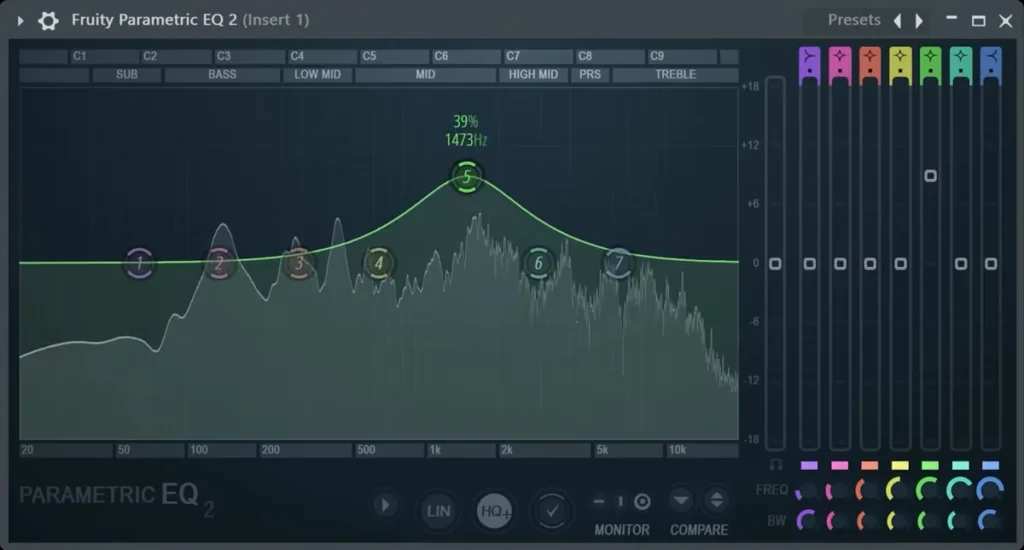
Price: free with every edition of FL Studio, including the free trial.
Parametric EQ 2 is a 7-band EQ with a built-in spectrum analyzer, so you can see your sound while you shape it. Each band can be a low or high shelf, a bell (Image-Line calls it peaking), a band pass, a notch, or a low or high pass. The low and high pass bands can be as steep as 48 dB per octave. It also has a linear phase mode, an HQ mode for more natural, analog-style curves, and a Compare button that saves one setting so you can flip between two versions.
It’s the EQ that Mix Elite’s EQ lesson teaches with, and when you open it, its seven bands are already spread across the range. The lesson’s point is that today’s virtual parametric EQs give you much more control, and you can see what you’re doing.
Best for: everyday mixing in FL Studio, and learning EQ before you spend anything. Read Image-Line’s manual.
How to use Parametric EQ 2
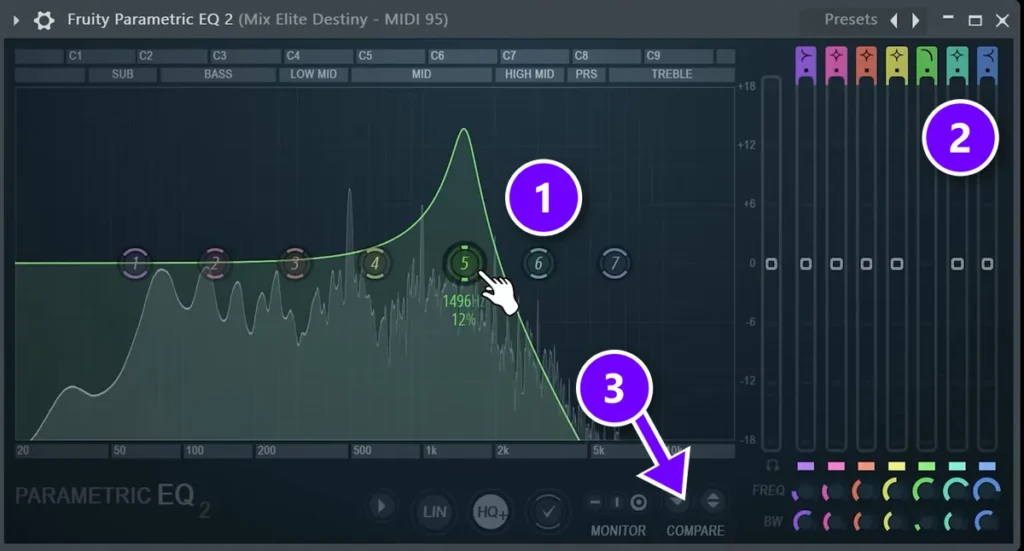
Open it from any empty effect slot in the FL Studio Mixer, then pick Fruity Parametric EQ 2 from the list. These four moves cover most of what you’ll do:
- Drag a band’s dot (1) up to boost or down to cut, and left or right to change its frequency.
- Scroll your mouse wheel over the dot to make the band narrower for a small, surgical fix, or wider for a gentle change to the whole tone.
- Click a band’s shape button (2) and drag up or down to turn it into a low cut, a shelf, a notch and so on. Right-click a dot for the same choices plus the slope.
- Click the first Compare arrow (3) to save your EQ, try something new, then flip between the two with the other arrow.
Mix Elite’s full method, five questions to ask about every sound, is in our guide to how to use EQ in mixing. The video below shows it in action.
Bonus: the Pultec low-end trick in Parametric EQ 2
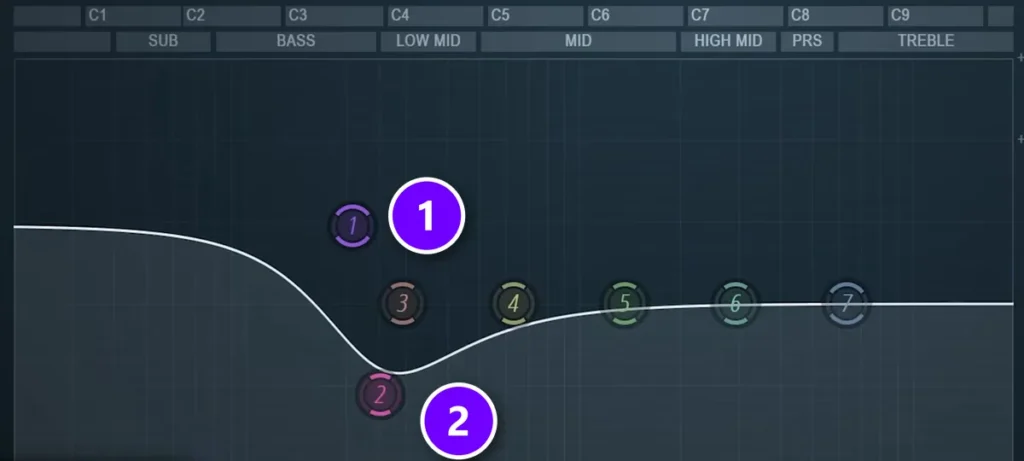
You don’t need a hardware Pultec for its most famous trick. In Mix Elite’s Pultec EQ video, the same shape goes into Parametric EQ 2 on a kick: a low shelf boost (1) with a bell cut just above it (2).
The idea comes from the Pultec EQP-1A, which lets you boost and cut the same low frequency at once. The boost adds weight, and the dip just above it keeps the low mids from getting muddy. Try it on a kick or a bass, and keep both moves small.
When should you use a digital EQ vs an analog EQ?
Use a clean digital EQ to fix problems, like cutting rumble, mud or a harsh note with narrow, exact bands. Use an analog-style EQ to add tone, with broad, musical boosts and a little saturation that make vocals, bass, drums or the whole mix feel warmer. You can use both on one track: fix first, then color.
iZotope’s EQ guide works in that order on vocals and acoustic guitar, with a digital EQ for the harsh resonances and an analog model after it for tone. On a vocal, that means a low cut and a small cut where it sounds harsh or boxy, then a Pultec-style or Sie-Q high boost for a smooth, airy top.
The best digital EQ plugins for clean, precise mixing
Digital EQs are clean and exact. They don’t add color unless you ask them to, which makes them the right tool for fixing problems.
2. FabFilter Pro-Q 4
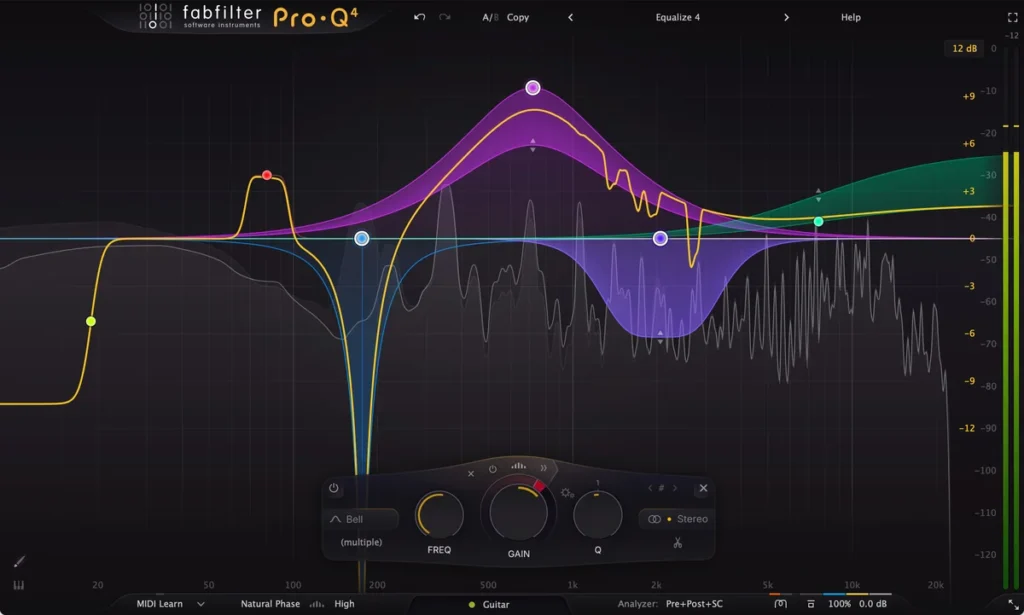
Price: $199 on FabFilter’s US shop on October 12, 2026, with a 30-day free trial.
Pro-Q 4 replaced the Pro-Q 3 from our old list, and FabFilter’s old Pro-Q 3 page now sends you to it. You get up to 24 bands, and every bell and shelf band can switch to dynamic EQ. Each band can work on the mid, side, left or right channel. The spectrum analyzer has EQ Match, which can copy the tone of another track.
There are zero latency, linear phase and Natural Phase modes, new Character modes called Gentle and Warm for a touch of analog warmth, and EQ Sketch, which lets you draw a whole curve in one go. It runs on Windows and macOS (Apple silicon or Intel) as VST, VST3, AU, CLAP and AAX, and there’s an iPad version too.
Best for: one EQ that does everything, fast. See it on FabFilter’s site.
3. TDR Nova (Tokyo Dawn Labs)
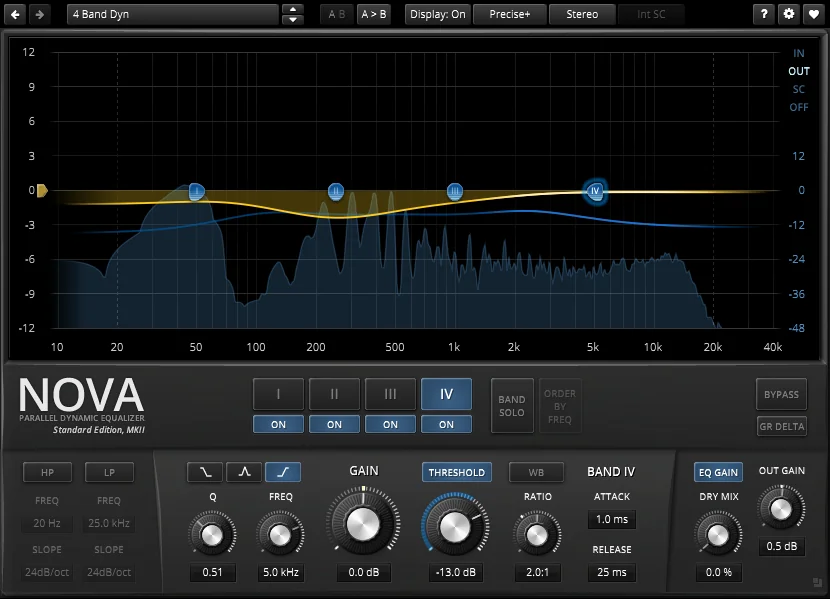
Price: free, with no account needed. The paid Nova GE is €60 and has six dynamic bands.
TDR Nova is a dynamic EQ. It has four bands plus high-pass and low-pass filters, and each band can act as a normal EQ, a dynamic EQ or a compressor for just one frequency range. That’s perfect for a boomy note that only booms now and then, or an ‘s’ that only hurts on some words.
It has a spectrum analyzer, plus left/right and mid/side modes. It runs on Windows 7 or newer and on Mac OS X 10.9 or newer (native on Apple silicon), as VST2, VST3, AU and AAX. If dynamic EQ is new to you, start with our guide to how to use dynamic EQ.
Best for: taming problem notes for free. Get it from Tokyo Dawn Labs.
4. MEqualizer (MeldaProduction)
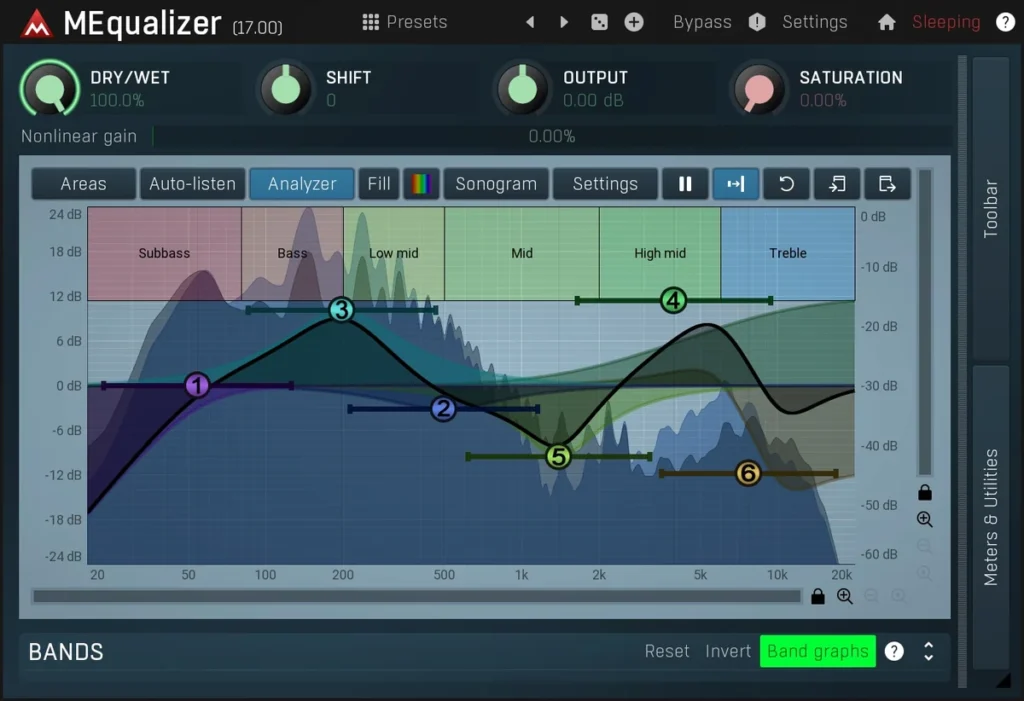
Price: free in MeldaProduction’s MFreeFXBundle of 38 effects. You install it with the MPluginManager app and a free Melda account.
MEqualizer is a 6-band EQ with all the usual band shapes, a spectrum analyzer, built-in tube saturation for an analog feel, and mid/side and left/right modes. It runs on Windows 10 and 11 (64-bit) and macOS 10.14 or newer, as VST, VST3, AU and AAX. The free version shows a red reminder box at the bottom of the window; a €49 upgrade removes it and adds extras like the sonogram.
Best for: a free EQ with saturation and mid/side built in. See it on MeldaProduction’s site.
The best analog EQ plugins for warmth and character
The best analog EQ plugin for most people is Universal Audio’s Pultec Passive EQ Collection, for fat low end and airy highs: $149 list, $39 on sale on October 12, 2026. The best free one is Analog Obsession’s Rare, a Pultec-style EQ. For console tone, pick SSL Native Channel Strip 2 or Waves’ API 550.
Analog-style EQs copy famous hardware. They have fewer bands and fewer choices, but their curves are broad and musical, and many add a little saturation, which is gentle distortion that makes a sound feel warmer. Max makes the same point about warmth: if a sound needs to be richer, he suggests saturation instead of a big EQ boost, because “EQ only boosts what’s already there.”
5. Pultec Passive EQ Collection (Universal Audio)
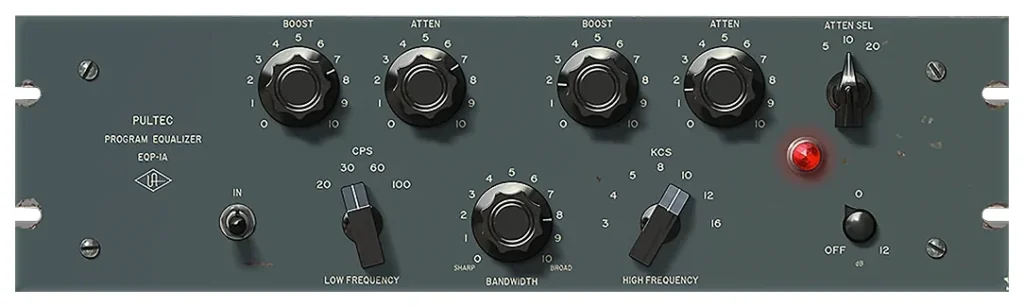
Price: $149 list, and $39 on sale on UA’s store on October 12, 2026. It’s also part of the UAD Spark subscription, which has a free trial.
You get three Pultec models. The EQP-1A is the famous one: it can boost and cut the low end at the same time and add airy highs. The MEQ-5 shapes the midrange with two boosts and one dip, and the HLF-3C is a pair of high-pass and low-pass filters for cleanup or retro effects.
It runs natively on Mac (including Apple silicon) and Windows as VST3, AU and AAX, so you don’t need any UA hardware. Each purchase also covers the Apollo and UAD-2 versions.
Best for: fat low end and airy highs on kicks, bass, vocals and the mix bus. See it on UA’s site.
6. Rare (Analog Obsession)
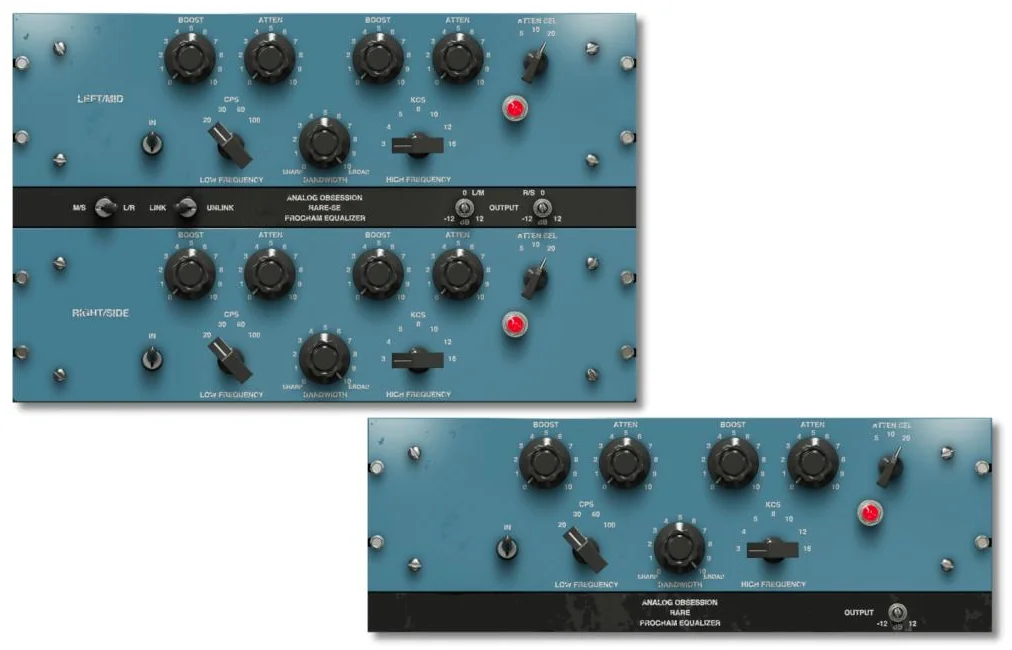
Price: free. Analog Obsession says its plugins are totally free, and supporting it on Patreon is optional. Downloads are linked from its Patreon posts.
Rare is a free EQ in the Pultec style. The site calls it a “Well known Vintage Program Equalizer” and its controls follow the EQP-1A layout: a low boost and cut at 20, 30, 60 or 100 Hz, a high boost from 3 to 16 kHz with a width knob, and a high cut. The Rare-SE version adds mid/side and left/right modes.
It comes as VST3, AU and AAX in 64-bit. Analog Obsession’s FAQ lists macOS 10.11 to 13 and Windows 10 to 11, so check your system first. Rare now sits on the site’s bundles page, and Analog Obsession also has a newer Pultec-style EQ called POORTEC.
Best for: the Pultec sound for free. See it on Analog Obsession’s site.
7. SSL Native Channel Strip 2 (Solid State Logic)
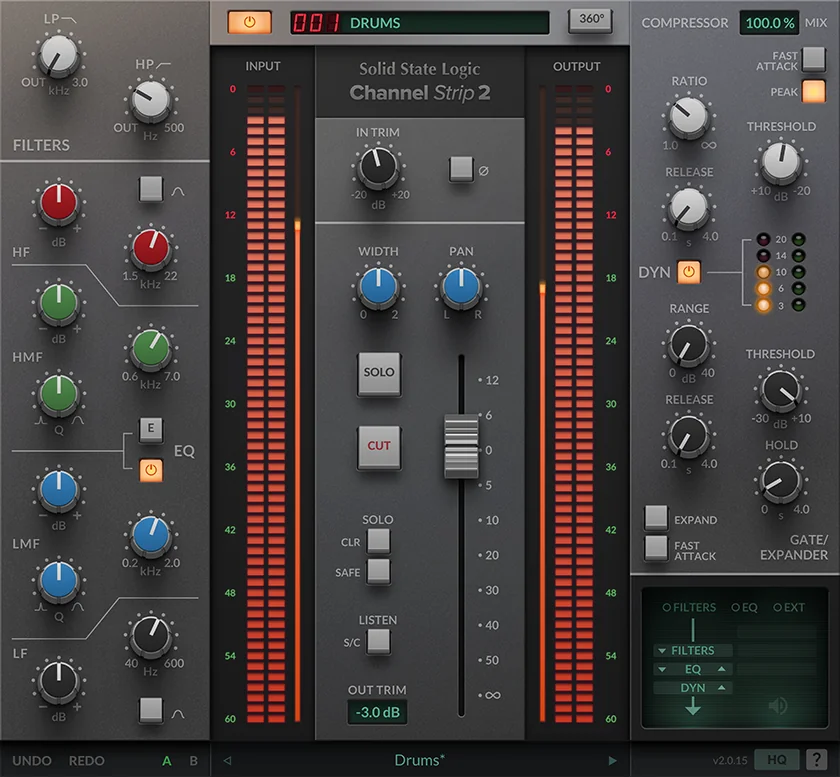
Price: $149 for a license on SSL’s store on October 12, 2026. It’s also in SSL’s Complete Access subscription, and there’s a demo.
This is the sound of an SSL mixing desk, inspired by console channel strips like the SSL 9000 K. The 4-band EQ switches between the E Series and G Series character, with two shelves and two bell bands plus high-pass and low-pass filters. You also get a compressor, a gate and an output section with pan and stereo width.
It runs on Mac (native on Apple silicon) and Windows as VST3, AU and AAX.
Best for: the classic console sound on every channel. See it on SSL’s store.
8. API 550 (Waves)
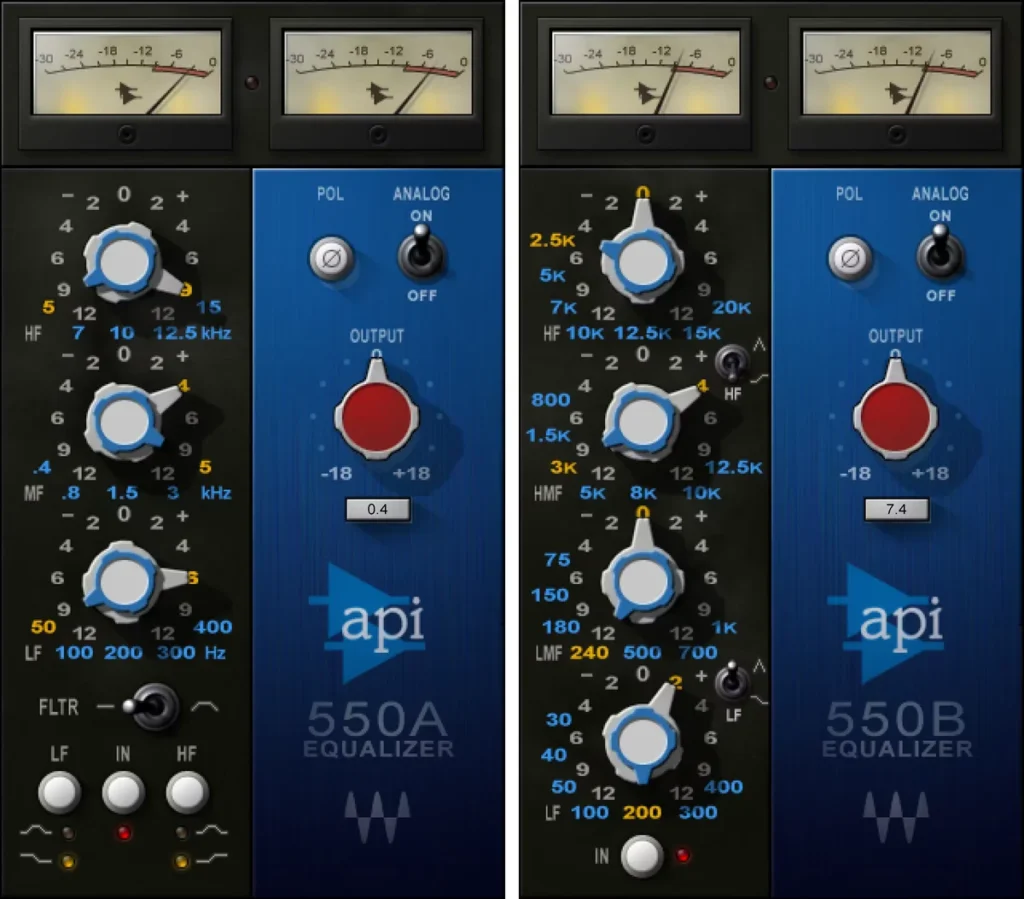
Price: $149 list, and $34.99 on sale (77% off) on Waves’ site on October 12, 2026. Waves sale prices change often. It’s also in the Waves Ultimate subscription.
You get models of two late-1960s API EQs. The 550A has three bands with five frequencies each, plus a band-pass filter, and the 550B has four overlapping bands. Both use API’s proportional Q: the more you boost, the narrower the band gets, which keeps big boosts sounding focused.
It runs on macOS 14 or newer (Intel or Apple silicon) and on Windows 10 (64-bit) or 11, as VST3, AU and AAX.
Best for: punchy drums and parts that need to cut through. See it on Waves’ site.
9. Manley Massive Passive EQ (Universal Audio)
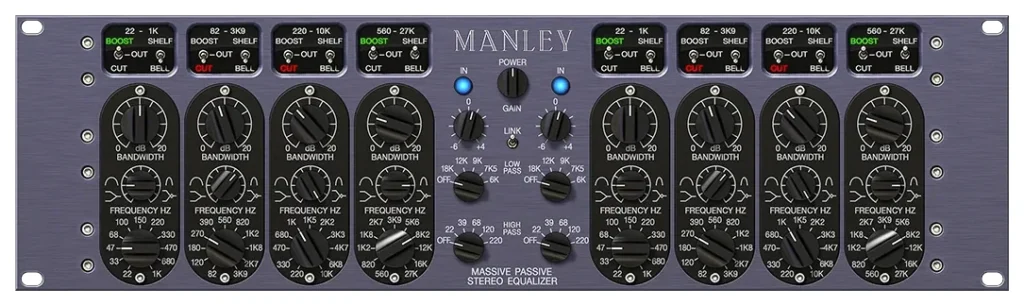
Price: $149 on UA’s store on October 12, 2026, not on sale that day. It’s also in UAD Spark.
The Massive Passive is a two-channel, four-band tube EQ. Each band can boost or cut, as a shelf or a bell, with wide, gentle curves, plus high-pass and low-pass filters. Besides the standard version for mixing, you get a Mastering version with 16 stepped settings per control, so you can recall a setting exactly.
It runs natively on Mac (including Apple silicon) and Windows as VST3, AU and AAX, with no UA hardware needed.
Best for: mastering and the mix bus. See it on UA’s site.
10. Sie-Q (Soundtoys)
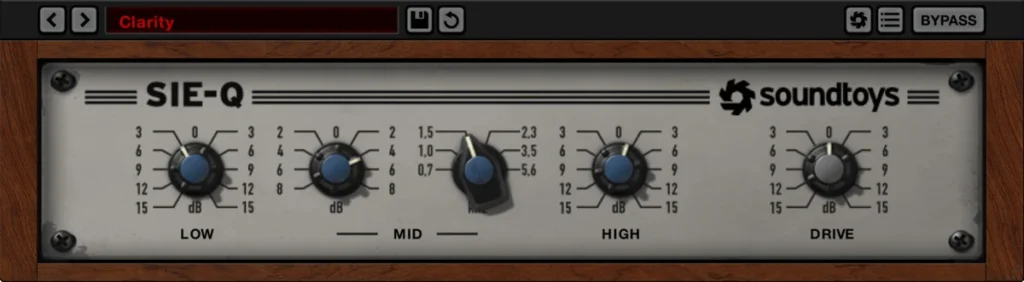
Price: $99 on Soundtoys’ site on October 12, 2026, with a free trial. It’s paid, not free.
Sie-Q copies the Siemens W295b, a 1960s German radio EQ. It has just three bands: a smooth High band for air, a switched Mid band from 0.7 to 5.6 kHz, and a Low band, plus a Drive knob for analog saturation. With so few controls, it’s hard to make it sound bad.
It runs on macOS 10.15 or later (Apple silicon too) and Windows 10 or later, as VST2, VST3, AU and AAX. It doesn’t run on ARM-based Windows PCs.
Best for: quick tone on vocals, guitars, drums and the mix bus. See it on Soundtoys’ site.
The best EQ plugin for harsh sounds
Harsh sounds are the hardest EQ job, because the harsh frequency often changes from note to note. The manual fix is to boost a narrow band, sweep it until the harshness jumps out, then cut it. Soothe does that same surgical job for you, automatically, and only while the harshness is there.
11. soothe3 (oeksound)
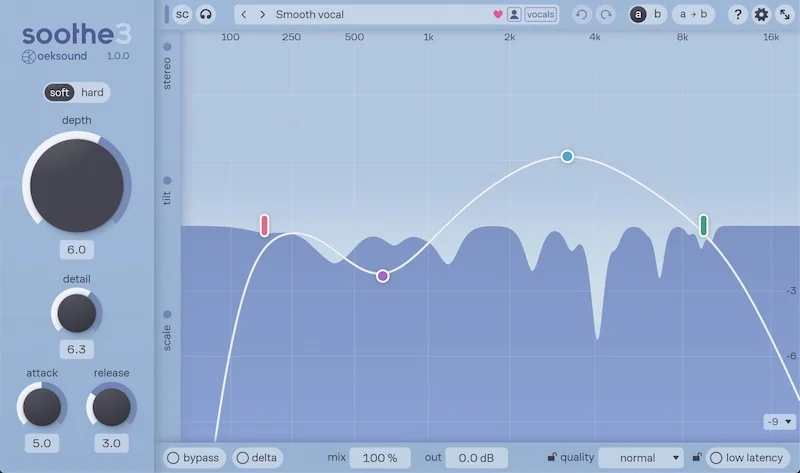
Price: $259 on oeksound’s US store on October 12, 2026, with a fully featured 20-day trial. It needs a free iLok account. soothe3 replaced soothe2 in 2026, and soothe2 owners can upgrade for $55.
soothe3 isn’t a classic EQ. It’s a dynamic resonance suppressor: it finds harsh resonances while the sound plays and turns them down only when and where they show up. You pick a soft or hard mode, and a new detail knob makes it more precise than soothe2. You can also listen to only what it removes, feed it a sidechain, and switch on a low latency mode while you record.
Go easy, though. Overdo the cutting and you lose the nice grit in the sound, just as with a manual EQ cut. It runs on Windows 10 and 11 (64-bit, not ARM) and on macOS 10.14 to 26 (Apple silicon, and Intel up to macOS 15), as VST3, AU and AAX.
Best for: harsh vocals, bright synths and cymbals. See it on oeksound’s site.
Why buy a paid EQ plugin if your DAW already has one?
For extra features and color. The moves that matter most, like cutting low end a sound doesn’t need, making room between two sounds and removing a harsh frequency, work in any parametric EQ, including your DAW’s own. Producers pay for dynamic bands that only cut when a problem shows up, the warmth of analog-style EQs, or the speed of a tool like Pro-Q 4.
So you don’t need one at first. Mix Elite’s EQ lesson uses the stock Parametric EQ 2, and a paid EQ earns its place when you hit a clear limit.
When you do buy, watch the sales. On October 12, 2026, the Pultec collection was $39 instead of $149 and the API 550 was $34.99 instead of $149. Learning to hear what EQ does will improve your mix far more than a new plugin. That skill is what the mixing guide and the free mixing plugins list are for.
What happened to the EQs on our old list?
This page used to list a few EQs that have changed since. Here’s where they stand in October 2026:
- FabFilter Pro-Q 3: replaced by Pro-Q 4 (pick 2).
- SSL Native Channel Strip: the current version is Channel Strip 2 (pick 7), which runs natively on Apple silicon.
- Manley Massive Passive: still sold by UA ($149), and it runs natively, with no UA hardware needed (pick 9).
- Soundtoys Sie-Q: still sold, for $99.
- Waves API Collection: we now list the API 550 on its own (pick 8).
- Analog Obsession EQs: still free. Its Pultec-style Rare moved to the bundles page (pick 6).
Whichever EQ you pick, the skill is in the ears, not the plugin.
DAY 4 OF THE 7-DAY MUSIC PRODUCER COURSE
EQ is one part of a mix. Day 4 teaches the rest.
Day 4 of the 7-Day course is all about mixing: the simple ‘Holy-Quad’ mixing formula, the ‘Mix Murdering’ mistakes most beginners make, a one-click setting that makes your song wider with no new plugins, and the volume mistake that caps how good your mix can sound. You also get a mixing checklist and a mixing and production template. It’s taught in FL Studio (the free trial works), about 45 minutes a day, and at the end a pro gives you personal feedback on your finished track. It’s $27, and you get 60 days to decide if it was worth it.
Frequently asked questions
What are the best free EQ plugins for beginners?
If you use FL Studio, start with the Parametric EQ 2 you already have: it’s free in every edition and shows your sound on a spectrum analyzer. Outside FL Studio, TDR Nova is the best free EQ in 2026, with no account needed. For a free analog-style EQ, try Analog Obsession’s Pultec-style Rare.
Why buy a paid EQ plugin if your DAW already has one?
For extra features and color. Your DAW’s EQ handles the most important moves, like cutting low end a sound doesn’t need. Producers pay for dynamic bands that only cut when a problem shows up, the warmth of analog-style EQs, or the speed of FabFilter Pro-Q 4. Buy one when you can name what your stock EQ can’t do.
When should you use a digital EQ vs an analog EQ?
Use a clean digital EQ to fix problems, like a low cut for rumble or a narrow cut where a vocal sounds harsh or boxy. Use an analog-style EQ to add tone, like a Pultec-style or Sie-Q high boost for a smooth, airy top. You can use both on one track: fix with the digital EQ first, then color with the analog one.
What is the best analog EQ plugin?
For most people, a Pultec-style EQ: Universal Audio’s Pultec Passive EQ Collection ($149 list, $39 on sale on October 12, 2026) or the free Analog Obsession Rare. For console sound, try SSL Native Channel Strip 2 or Waves API 550. For mastering, the Manley Massive Passive is the classic.
What is the best EQ for FL Studio?
Fruity Parametric EQ 2. It comes with every FL Studio edition and the free trial, and has seven bands, a spectrum analyzer, a linear phase mode and a Compare button. It’s the EQ Mix Elite’s EQ lesson teaches with. Add TDR Nova for free dynamic EQ, and FabFilter Pro-Q 4 if you later want one paid EQ that does everything.