

“Do what you can, with what you’ve got, where you are.”
The best budget microphone for most home singers is the Audio-Technica AT2020 ($119), a studio condenser you plug into an audio interface. Under $50, get the Behringer C-1 ($39) condenser for a quiet room or the XM8500 ($18.70) dynamic for rap and noisy rooms. With no interface, the RØDE NT-USB+ ($179) is the USB mic to get.
Here’s a story that should calm your wallet. When Finneas and Billie Eilish made “Ocean Eyes”, their breakthrough song, his setup included an Audio-Technica mic that cost $80. He told Sound On Sound so himself.
So you don’t need a pricey mic to make a song people love. You need the right cheap one for your room, and a few good habits. Below are 15 picks from under $20 to $199, grouped by budget and by type, with every price checked in November 2026. After them come the steps for setting one up in FL Studio, from Mix Elite’s vocal recording tutorial.
Table of Contents
What is the best budget microphone for home recording?

It depends on your room more than your wallet. In a quiet room, a condenser like the AT2020 ($119) or the C-1 ($39) gives the most detail for the money. In a noisy or echoey bedroom, a dynamic mic like the e 835, the PodMic or the XM8500 sounds cleaner, because it hears less of the room.
In Mix Elite’s free 4.5-hour FL Studio course, Max, the founder of Mix Elite, puts the good news simply: “there are many condenser microphones that you can pick up for a good deal.” Cheap mics have gotten good. The bigger risk is buying the wrong type for your room.
This list stops at $200 on purpose. An XLR mic also needs an audio interface, a stand and a pop filter, and you’ll want closed-back headphones too. Keeping the mic under $200 leaves money for the rest. Our budget audio interface guide covers the box the mic plugs into, and our studio headphones guide covers the closed-back pair.
One more tip before you buy. Max suggests trying more than one: “it’s a good idea to order a few mics before deciding for the one you want to go with.” He explains why: every mic is like “a built-in EQ that your microphone applies to your voice.” Buy from a store with easy returns and keep the one that flatters you.
Which budget mic should you get for your job?
Start with what you record and where. Here’s the short version, using the 15 picks below:
- Singing in a quiet room: the AT2020 ($119), or the C-1 ($39) if money is tight.
- Singing in a noisy bedroom: the Sennheiser e 835 ($99.95).
- Rap vocals: the RØDE PodMic ($99) or the Shure MV7X, or the XM8500 ($18.70) to start.
- Podcasts, voice-over and streaming: the Samson Q2U ($99.99) on USB, or the MV7X with an interface.
- Acoustic guitar: the AT2020 or the LEWITT LCT 240 PRO ($129).
- Guitar amps and drums: the Shure SM57.
- No audio interface at all: the RØDE NT-USB+ ($179) for singing, or the FIFINE K669B ($36.99) for chat and ideas.
If you only remember one rule, make it this one: an untreated room wants a dynamic mic, a quiet room can take a condenser.
What to look for in a budget microphone
Cheap mics differ more than expensive ones, so check these six things before you pay:
- Condenser or dynamic: condensers catch more detail, but they also catch your room. Dynamic mics sound a little less open, but you don’t need a perfect room to use one.
- USB or XLR: USB plugs straight into your computer. XLR needs an audio interface, but it gives you room to upgrade.
- Pickup pattern: cardioid, which hears the front and rejects the back, is what you want for vocals. Extra patterns help with two-person podcasts.
- What’s in the box: a shock mount, desk stand or pop filter in the box saves you buying them separately.
- Headphone jack: on a USB mic, it lets you hear yourself straight from the mic, with no delay.
- Pad and low-cut switches: a pad turns the mic down for loud voices, and a low-cut removes rumble. Few budget mics have them; the AT2035 does.
Don’t pay extra for a higher sample rate either. For a vocal, 48 kHz is plenty.
Dynamic or condenser: which cheap mic suits your room?
Pick a condenser if your room is quiet and soft, and a dynamic if it isn’t. A condenser catches every detail of your voice, room included. A dynamic mic mostly hears what’s right in front of it.
Max explains the trade-off in Mix Elite’s free course. A condenser “picks up all the little nuances in your voice”, but it’s not as forgiving. With a dynamic mic, he says, “you would not need to make sure that your recording space is perfect.” He also points out that “condenser mics will always sound a bit brighter than Dynamic microphones out of the box”, which EQ can fix later.
So in an untreated bedroom, get a dynamic mic: the e 835 for singing, the PodMic or MV7X for rap and speech. In a quiet room with soft furnishings, the AT2020, LCT 240 PRO or C-1 condenser gives you more detail.
USB or XLR: which is better for music production?
For music, XLR is the better long-term setup: you can swap or upgrade the mic later, add more mics and run your studio speakers from the same audio interface. A USB mic has the interface built in, so you can’t upgrade one part on its own. USB is still the simplest way to record one voice.
Get USB if you want the simplest setup and only record one voice at a time. You plug in one cable and start. Get XLR if you want to grow. You’ll need an audio interface, but you can swap or add mics later. Can’t decide? The Samson Q2U has both outputs, so you don’t have to choose yet.
RØDE’s own guide to XLR and USB makes the same point: with a USB mic you’re locked to that one setup, and recording two mics at once, like an acoustic guitar in stereo, needs an XLR setup with an interface that has more than one input.
How much does a good microphone cost?
A good home recording mic costs $40 to $200. Under $50 you get honest starter mics like the C-1 and XM8500, around $100 you get mics people release music with, and by $200 you get extras like pads, shock mounts and better USB preamps.
Budget for the rest of the chain too. An XLR mic needs an audio interface, an XLR cable, a stand and a pop filter. Max’s take on those extras: “all of them are pretty cheap.” A USB mic needs none of that, which is why the cheapest complete setup is usually a USB mic plus closed-back headphones.
The best microphones under $50
Three honest starter mics: one dynamic for rap and noisy rooms, one USB mic for your laptop, and one studio condenser. None of them will hold you back on your first songs.
1. Behringer XM8500
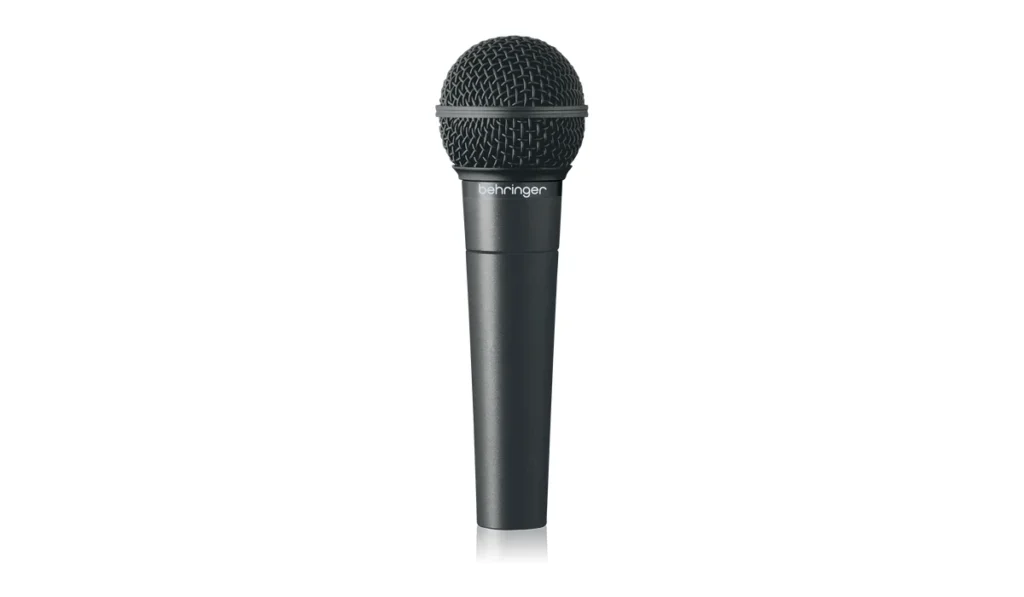
Best for: rap and loud vocals on the smallest budget, in any room.
The XM8500 is about the cheapest real XLR mic you can buy, and it’s a dynamic one, so it ignores most of your room. It has a cardioid pattern, which hears the front and rejects the back, plus a pop filter built into the ball-shaped grille and a shock mount inside that cuts handling noise. Behringer lists a 50 Hz to 15 kHz range. A stand adapter and a hard case come in the box.
The catch: it puts out a weak signal, like most dynamic mics, so your audio interface needs enough gain. There’s no XLR cable in the box.
Price: $18.70 at Thomann, November 2026. Type: cardioid dynamic, XLR.
2. FIFINE K669B
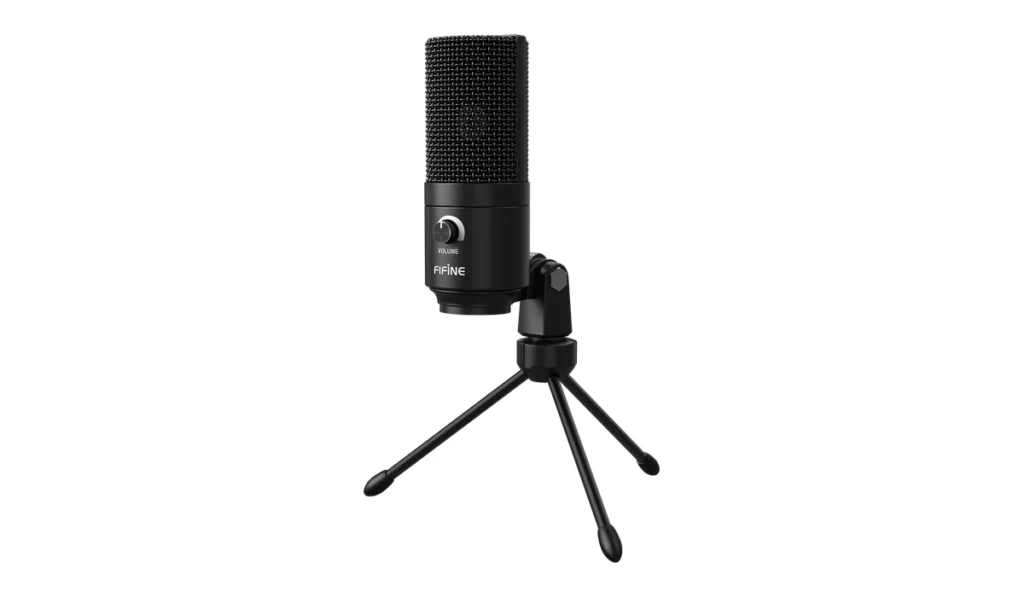
Best for: voice chat, streaming, gaming and quick song ideas on a laptop.
The K669B is a USB condenser that plugs straight into your computer, with no audio interface and no drivers. A volume knob on the front sets how loud you record, and a small tripod stand comes with it. FIFINE lists a 20 Hz to 20 kHz range and 130 dB max SPL, so shouting won’t break it up.
The catch: it’s a condenser, so it hears the room, and its spec list shows no headphone jack. Treat it as a sketchpad, not your forever vocal mic.
Price: $36.99 at FIFINE, checked November 10, 2026. Type: cardioid condenser, USB.
3. Behringer C-1
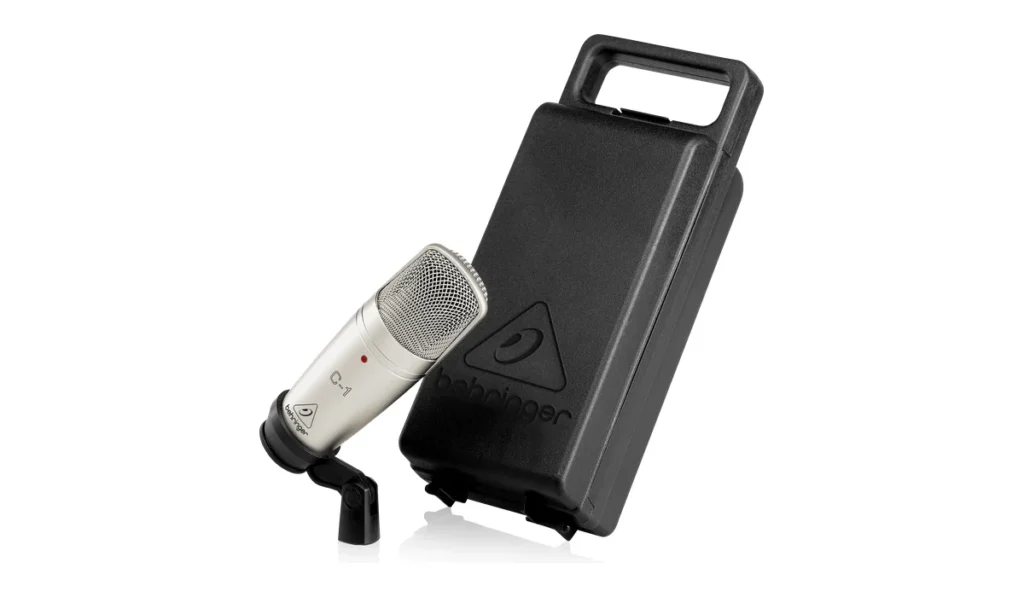
Best for: trying a large studio condenser for under $50.
The C-1 is one of the cheapest studio condensers from a big brand. Thomann’s spec table lists a cardioid pattern, a 40 to 20,000 Hz range and 136 dB max SPL, so a loud singer won’t overload it. A swivel stand adapter and a carrying case come with it. Like every XLR condenser, it needs 48V phantom power, which almost every audio interface has.
The catch: there’s no shock mount, pad or low-cut switch, so bumps on the stand and floor rumble can reach the recording.
Price: $39 at Thomann, November 2026. Type: cardioid condenser, XLR.
The best microphones under $100
This is the sweet spot for most beginners. Three of these four are dynamic mics that forgive a noisy room, and the MXL 990 is the cheapest condenser here with a shock mount in the box.
4. MXL 990
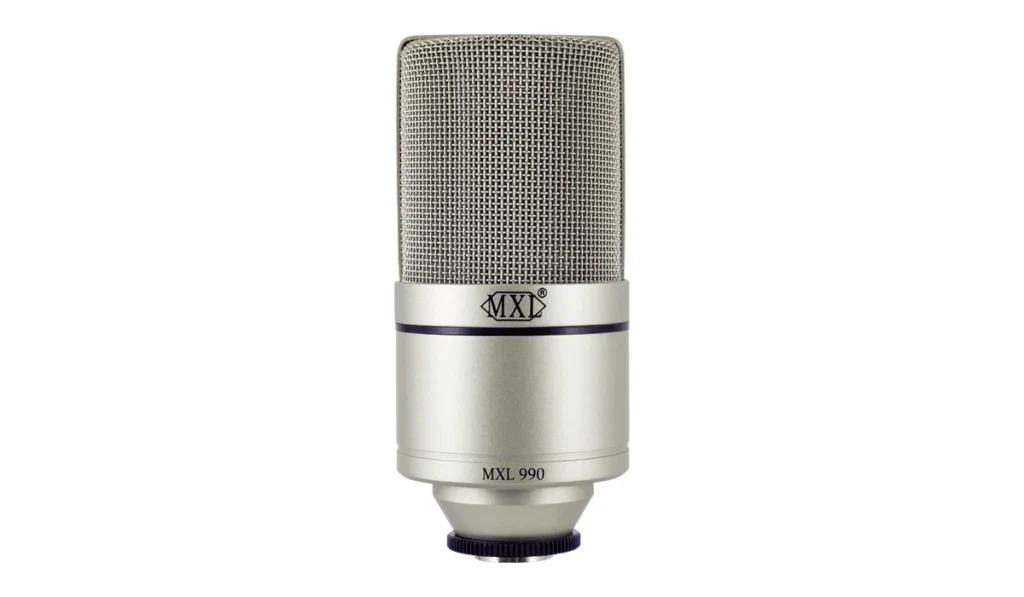
Best for: a first studio condenser with a shock mount in the box.
MXL calls the 990 a classic entry-level condenser for vocals. A shock mount, a stand adapter and a carrying case come in the box, which is rare at this price, and MXL lists a 20 Hz to 20 kHz range with 130 dB max SPL. In a quiet room, it gives a bright, open vocal for less than $90.
The catch: MXL lists its self-noise at 20 dB-A, so you may hear a little hiss under very soft singing. There’s no pop filter in the box.
Price: $89.95 at Guitar Center, checked November 10, 2026 (MXL lists no price). Type: cardioid condenser, XLR.
5. RØDE PodMic
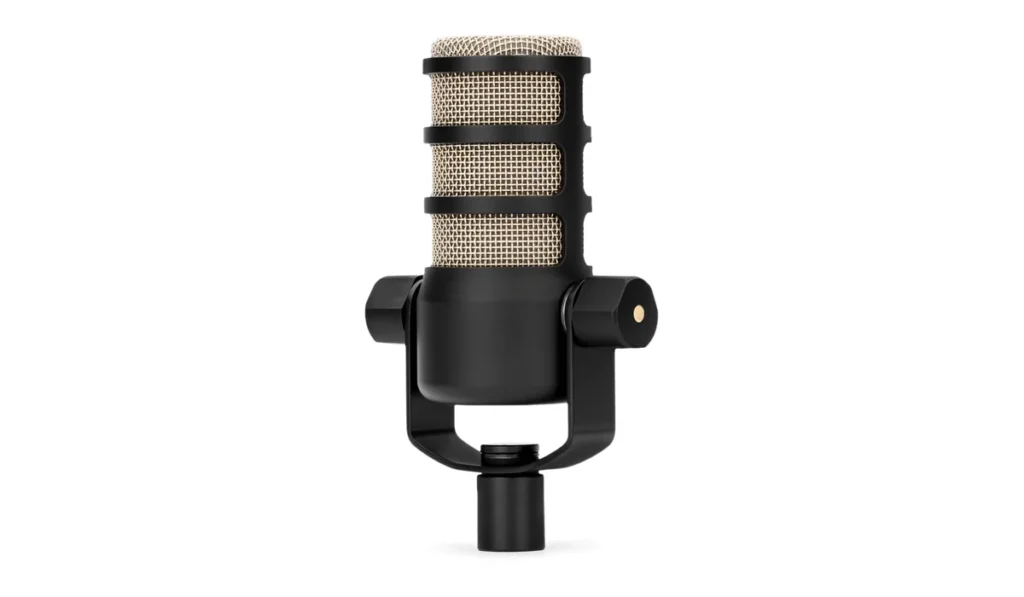
Best for: rap, spoken word and podcasts in a noisy room.
RØDE built the PodMic for voices up close. A pop filter and a shock mount sit inside the body, and it has a swing mount, so you don’t need extra parts. Its tight cardioid pattern keeps room noise down, which is why rappers in untreated bedrooms like it.
The catch: RØDE tuned it for speech, so for airy, high singing a condenser will sound more open. It needs an interface with good gain.
Price: $99 at RØDE, checked November 10, 2026. Type: cardioid dynamic, XLR.
6. Sennheiser e 835
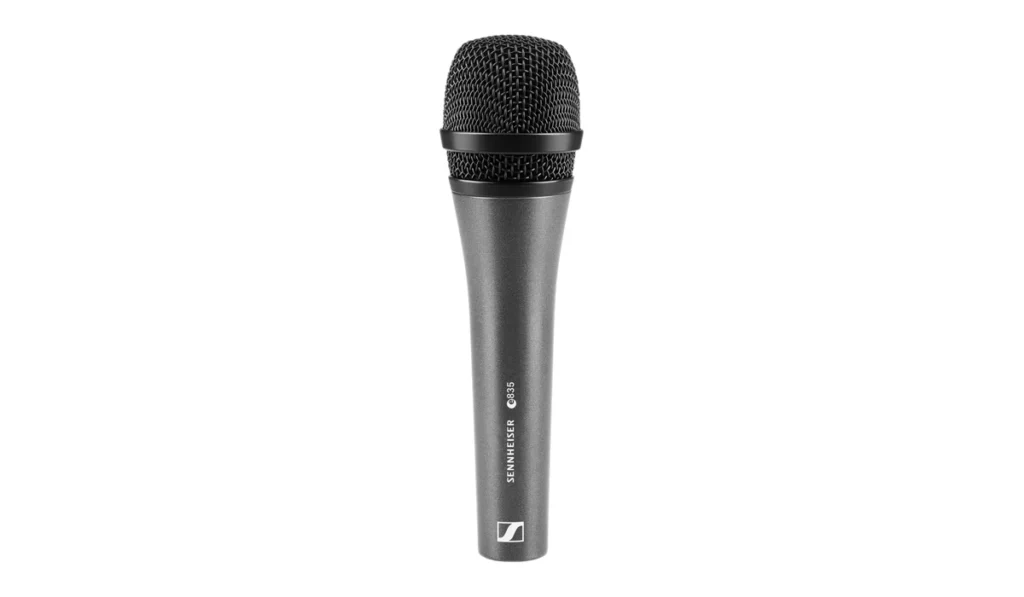
Best for: singing in an untreated room, and live gigs later.
The e 835 is a classic stage mic, and that’s exactly why it works at home: it hears your voice and very little else. It’s cardioid, with a 40 to 16,000 Hz range, and Sennheiser backs it with a 10-year warranty in the USA.
The catch: dynamic mics put out a weaker signal, so use an interface with decent gain, and expect a little less air on top than a condenser gives you.
Price: $99.95 at Sennheiser, checked November 10, 2026. Type: cardioid dynamic, XLR.
7. Samson Q2U
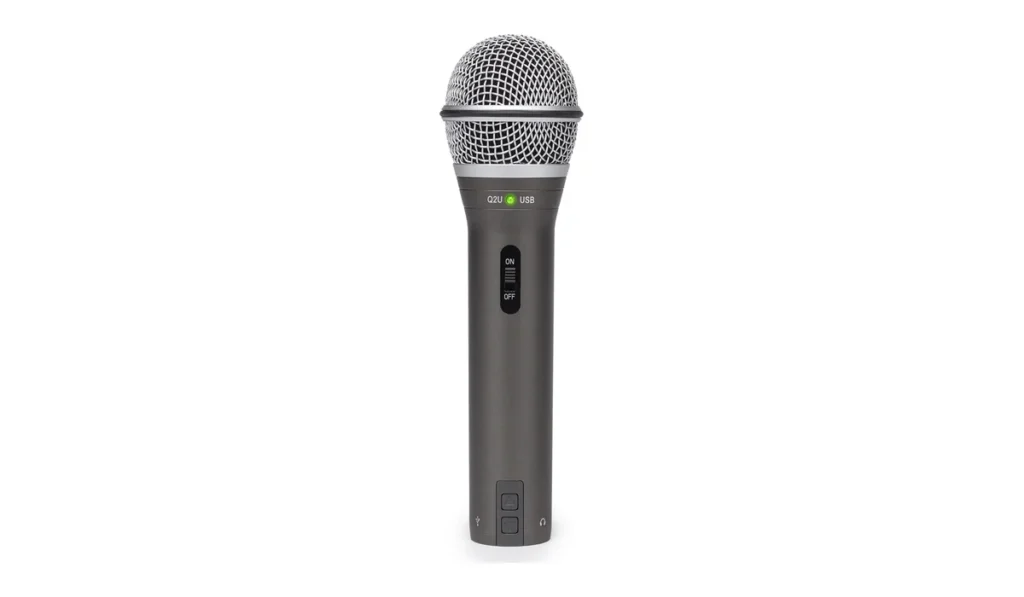
Best for: starting on USB today and moving to an audio interface later.
The Q2U has both a USB-C and an XLR output, so it’s one of the few mics that grows with you. Plug it into your laptop now, then plug the same mic into an interface when you buy one. It’s a cardioid dynamic, so it stays calm in a noisy room, and it has a headphone jack with its own volume knob for zero-latency monitoring. A desk tripod, a mic clip, a foam windscreen and both cables come in the pack.
The catch: over USB it records at up to 16-bit, 48 kHz. That’s fine for demos and podcasts, but the XLR side is the better path for finished songs.
Price: $99.99 at B&H, November 2026. Type: cardioid dynamic, USB-C and XLR.
The best XLR microphones under $200
These five plug into an audio interface. You get the mics people have used on real records, a quieter condenser for soft vocals, and a podcast-style dynamic that needs very little gain.
8. Shure SM57
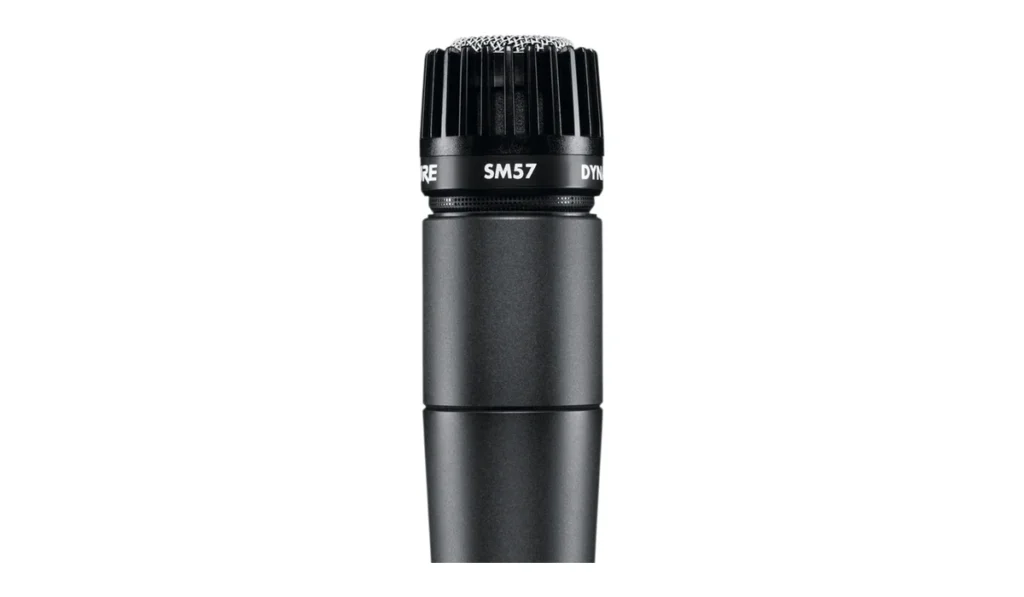
Best for: guitar amps, snare drums and any loud instrument, with vocals as a bonus.
The SM57 is the mic Shure itself calls the most popular choice for miking an amp or an acoustic instrument. It’s a cardioid dynamic with a 40 to 15,000 Hz range and a presence rise that helps guitars and snares cut through. It survives almost anything, and it costs about the same as the cheap mics on this list.
It works on vocals too. Shure says Justin Vernon recorded his breakthrough Bon Iver album with a single SM57.
The catch: it has no built-in pop filter, so for vocals add a foam windscreen or a pop filter and sing close.
Price: $109 at Guitar Center, which had it on sale for $89 on November 10, 2026. Type: cardioid dynamic, XLR.
9. Audio-Technica AT2020
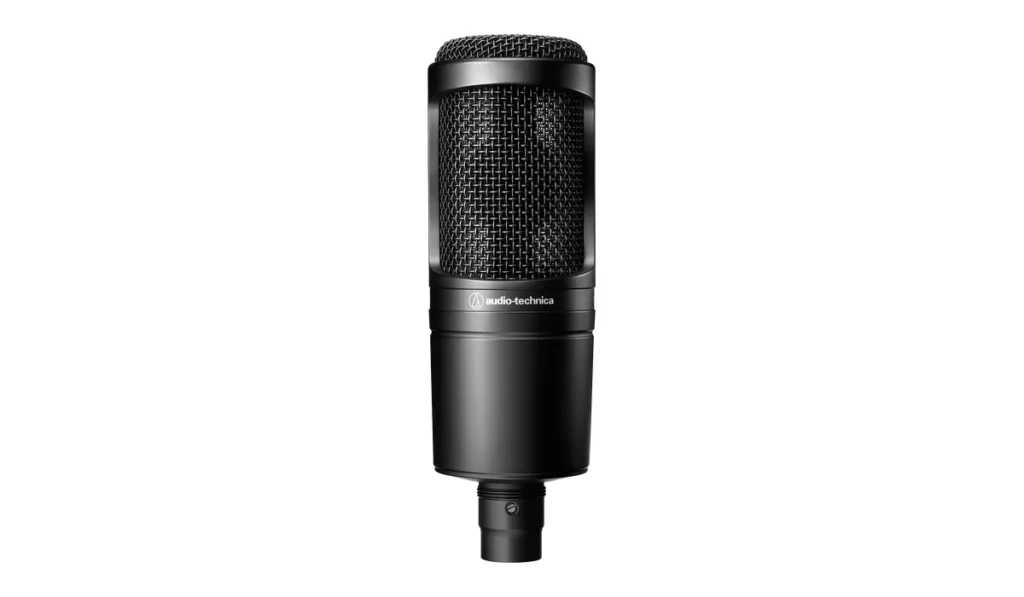
Best for: your first studio condenser, for vocals and acoustic guitar.
The AT2020 is the classic budget condenser, and it’s the mic Finneas had when he and Billie Eilish made “Ocean Eyes”. It’s cardioid, covers 20 to 20,000 Hz and handles 144 dB SPL, so even a loud voice won’t overload it. It’s just as good on an acoustic guitar, pointed where the neck meets the body.
The catch: it comes with a stand mount but no shock mount or pop filter, and it needs 48V phantom power.
Price: $119 at Guitar Center, checked November 10, 2026. Type: cardioid condenser, XLR.
10. LEWITT LCT 240 PRO
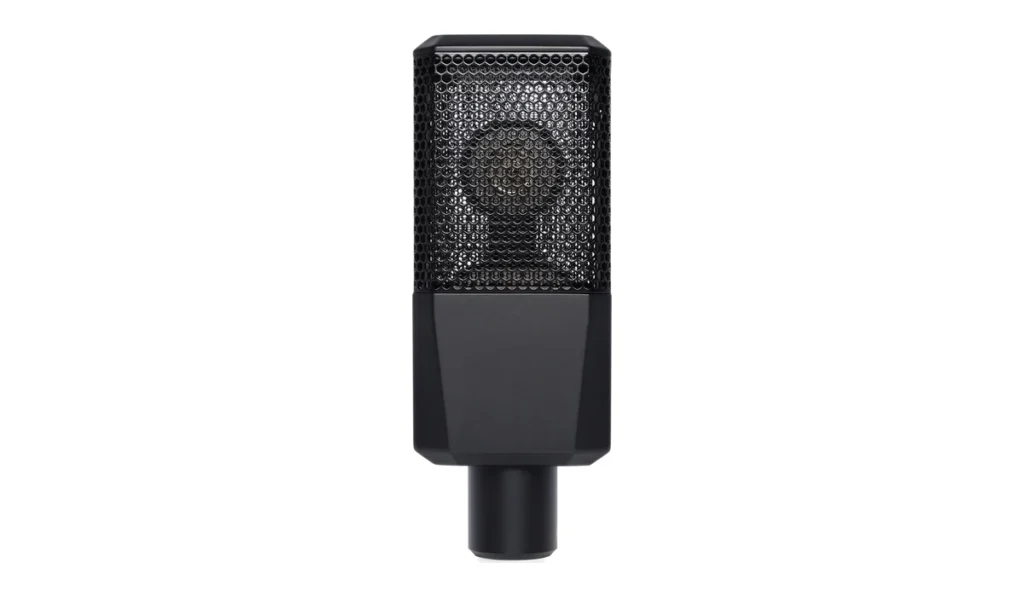
Best for: a quieter condenser for soft vocals and acoustic instruments.
The LCT 240 PRO is a compact cardioid condenser for vocals, instruments and podcasts. LEWITT lists 19 dB(A) self-noise and 142 dB max SPL, so it handles both whispers and belting. A mic mount, a foam windscreen and a bag come with it, and LEWITT’s guide suggests singing from 15 to 30 cm away with a pop filter.
The catch: the standard version has no shock mount. The $169 vocal set adds one, plus a magnetic pop filter.
Price: $129 at Guitar Center, checked November 10, 2026. Type: cardioid condenser, XLR.
11. Audio-Technica AT2035
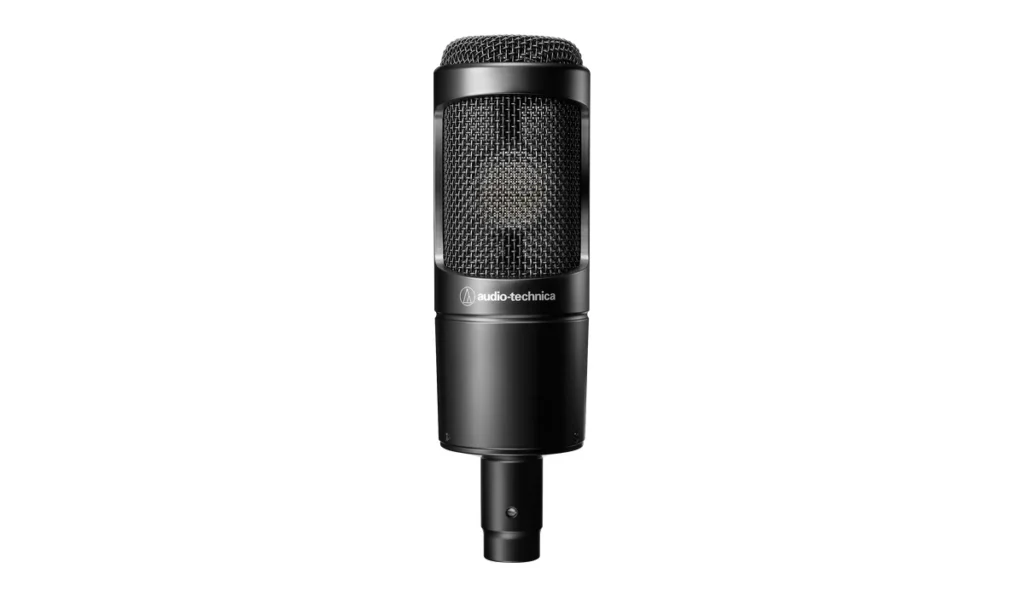
Best for: the most features for the money in an XLR condenser.
The AT2035 adds the two switches the AT2020 lacks: an 80 Hz low-cut that removes rumble, and a 10 dB pad for loud singers and rappers. It handles 148 dB SPL, or 158 with the pad on, and a custom shock mount comes in the box.
The catch: like any XLR condenser, it needs phantom power, and in an echoey room it will hear the echo.
Price: $159 at Guitar Center, checked November 10, 2026. Type: cardioid condenser, XLR.
12. Shure MV7X
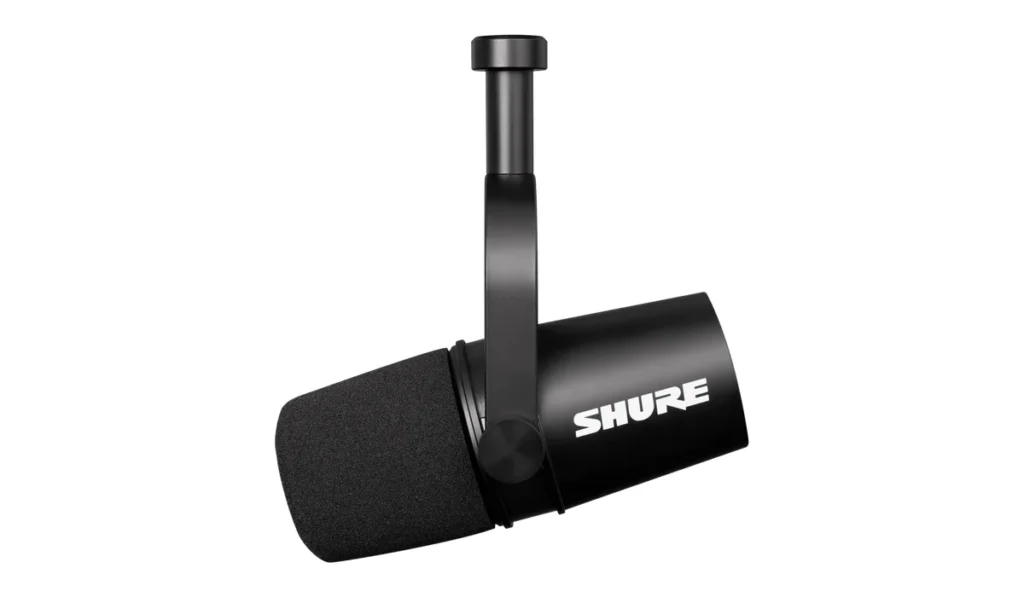
Best for: rap and voice in an untreated room, with a cheap interface.
The MV7X is the XLR-only version of Shure’s MV7 podcast mic. Shure says its Voice Isolation Technology, a dynamic capsule with strong rear rejection and a shock mount, keeps it focused on your voice in imperfect rooms. Shure also says it works with almost any audio interface without extra gain, which solves the usual dynamic-mic problem on a budget interface.
The catch: there’s no USB output and no cable in the box. Shure tuned it for spoken word, though it was built with singers in mind too.
Price: $199 at Guitar Center, which had it on sale for $169 on November 10, 2026. Type: dynamic, XLR.
The best USB microphones under $200
No interface needed: plug in one cable and record. All three have a headphone jack so you can hear yourself with no delay.
13. Logitech G Yeti
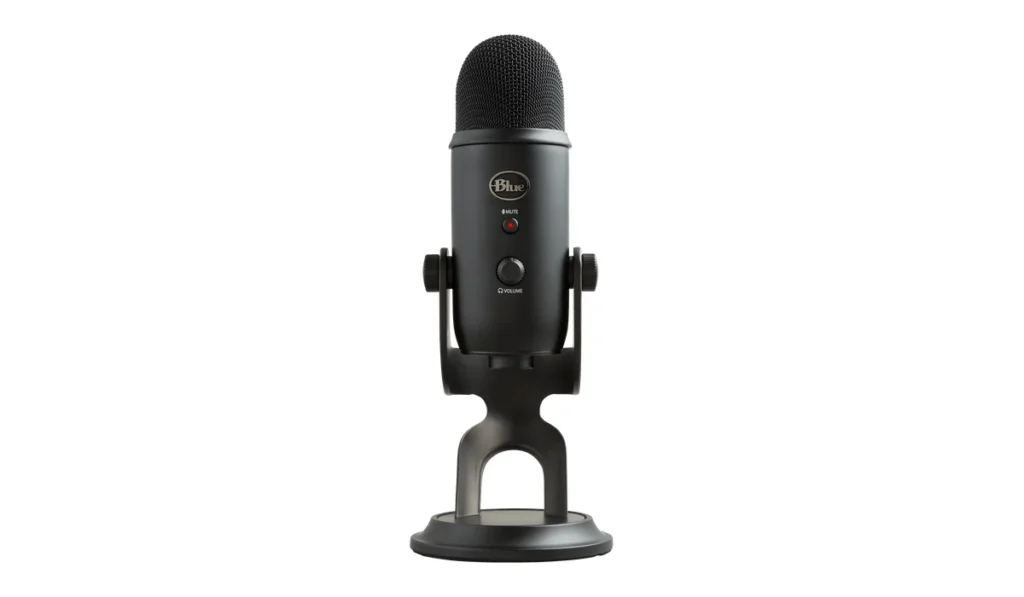
Best for: streaming, gaming, voice-over and quick song ideas over USB.
You may know it as the Blue Yeti, and it’s now sold under Logitech G. Three capsules inside give you four pickup patterns: cardioid, bidirectional, omni and stereo. A headphone output, a gain knob and a mute button sit on the body. For singing, choose cardioid and sing into the side, not the top.
The catch: it records at 16-bit/48 kHz, while the next two USB mics record at 24-bit, and it’s big and heavy on a desk.
Price: $139.99 at Logitech G, which had it on sale for $109.99 on November 10, 2026. Type: condenser with four patterns, USB.
14. Audio-Technica AT2020USB-X
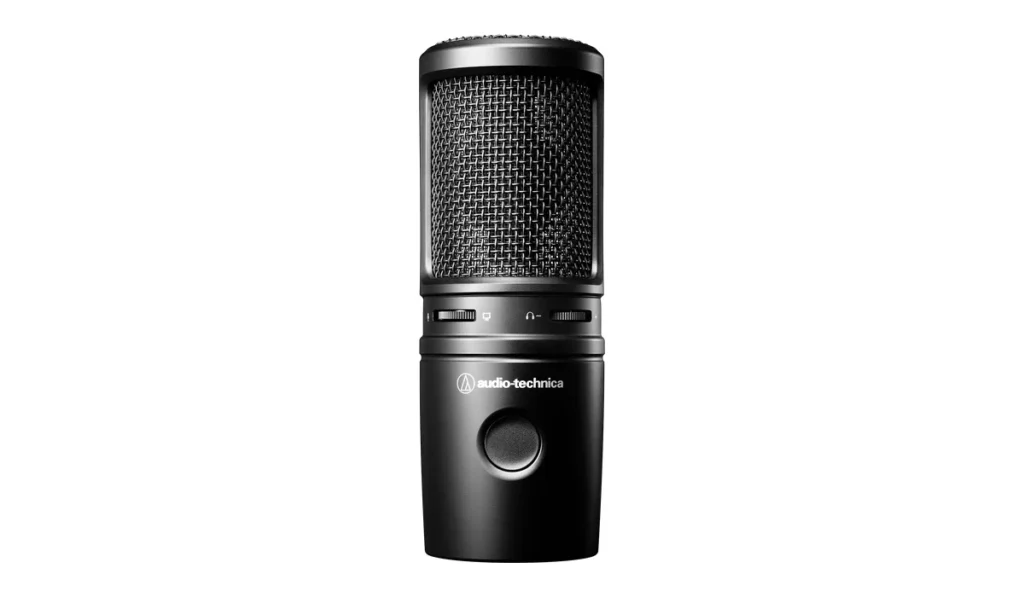
Best for: the AT2020 sound without an audio interface.
The AT2020USB-X is the USB-C member of the AT2020 family. It records at up to 24-bit/96 kHz and has a headphone jack with a volume control, a mix control that blends your voice with your track, and a mute button. A desk stand and a cable come with it.
The catch: like the AT2020, it’s a condenser, so it needs a quiet room to shine.
Price: $169 at Guitar Center, checked November 10, 2026. Type: cardioid condenser, USB-C.
15. RØDE NT-USB+
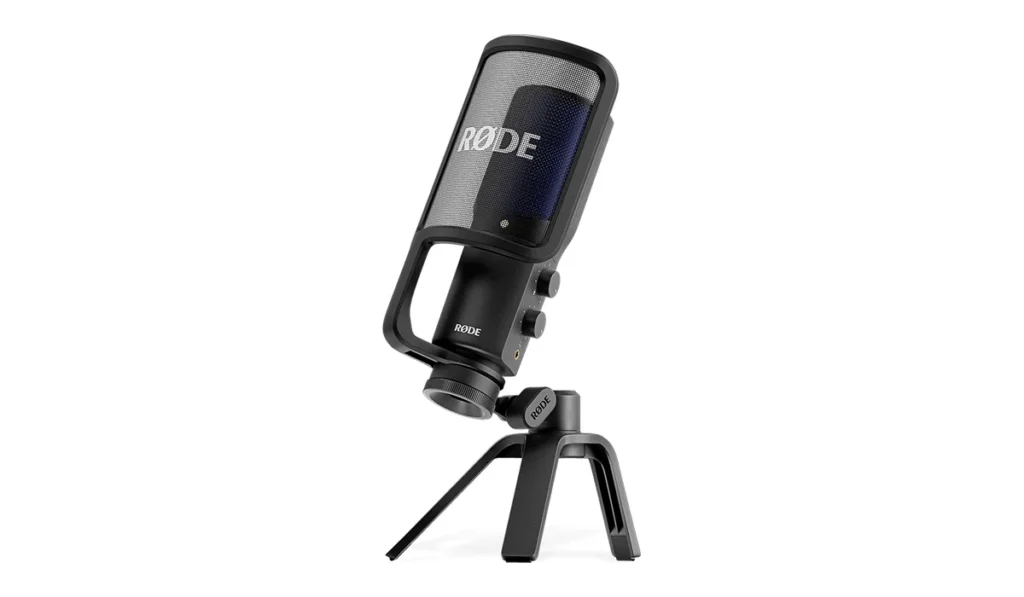
Best for: the best budget USB mic for singing.
RØDE packed the NT-USB+ with its Revolution Preamp, a high-power headphone output with zero-latency monitoring, and APHEX processing you can switch on in RØDE’s apps. It records at 24-bit/48 kHz over USB-C. A desktop stand and a pop filter are in the box, so you can record your first vocal the day it arrives.
The catch: you can’t add a second mic later, which is true of every USB mic.
Price: $179 at RØDE, checked November 10, 2026. Type: cardioid condenser, USB-C.
What is the best affordable condenser mic?
Pick by how you connect. With an audio interface, the AT2020 ($119) is the safest choice, the C-1 ($39) is the cheapest large condenser worth buying, and the AT2035 ($159) is worth the extra money for its shock mount, pad and low-cut. Without an interface, the NT-USB+ ($179) is the affordable condenser mic to get.
If soft singing is your thing, look at self-noise, the hiss a mic adds by itself. The LCT 240 PRO lists 19 dB(A), quieter than the MXL 990’s 20 dB-A, though both are fine for a normal vocal.
What is the best budget mic for rap vocals?
For rap, a dynamic mic is usually the better buy: the RØDE PodMic ($99) or the Shure MV7X under $200, and the Behringer XM8500 ($18.70) if you’re starting from zero. Rap is loud and close to the mic, and a dynamic mic handles that while ignoring the room. If you record in a quiet, treated space and want more sparkle, the AT2035’s 10 dB pad keeps loud takes clean.
What is the best cheap mic for streaming and gaming?
For streaming and gaming, a USB mic keeps things simple. The FIFINE K669B ($36.99) is the budget pick, the Samson Q2U ($99.99) cuts out more keyboard and room noise because it’s dynamic, and the Logitech G Yeti adds a mute button and four patterns. If you also make music, the Q2U is the one that grows with you, because its XLR output works with an audio interface later.
Why do my vocals sound hollow and noisy?
Hollow vocals come from the room: the mic picks up your voice plus its reflections off hard walls, which makes the recording muddy and unclear. Noise comes from fans, air conditioning and traffic. Sing closer, put something soft behind you, and use a dynamic mic if the room stays echoey.
Distance matters most. LEWITT’s guide to recording vocals at home points out that singing close to the mic isolates your voice from the room’s reflections, and RØDE suggests 6 to 12 inches from a large-diaphragm condenser. Shure adds that a pillow or duvet right behind the mic soaks up reflections, and that a bathroom, with all its hard surfaces, is a bad place to record.
How do you record clear vocals at home without background noise?
Pick the quietest room with the most soft things in it, turn off fans and air conditioning, and sing into the front of the mic from about one or two fists away. A blanket or duvet behind you soaks up reflections, and keeping the back of a cardioid mic toward the noise helps too.
A cheap mic in a good spot beats a pricey mic in a bad one. The setup rules from Mix Elite’s free course cost almost nothing:
- Record in a quiet room with soft things around you and no fans or air conditioning running. Even a closet works, as long as it has little to no echo.
- Use a stand and a pop filter. Don’t hold a condenser in your hand.
- Find the front of the mic. Max says “you will not believe how many people I see do it wrong.” A side-address mic like the AT2020 or C-1 is sung into from the side, not the top.
- Sing at mouth level, about one or two fists away, and keep the same distance the whole time so your tone doesn’t jump around.
- Set the gain so your loudest line never lights the red clip light on your interface.
- Record a few takes and keep the best parts.
Want a better room without spending much? Our guide to DIY acoustic treatment shows how, and our home studio setup guide covers the rest of the gear.
How to set up a budget mic in FL Studio
USB or XLR, FL Studio needs a couple of settings before you hit record. These frames come from Mix Elite’s vocal recording tutorial, which you can watch right here:
Step 1: Pick the driver and lower the buffer
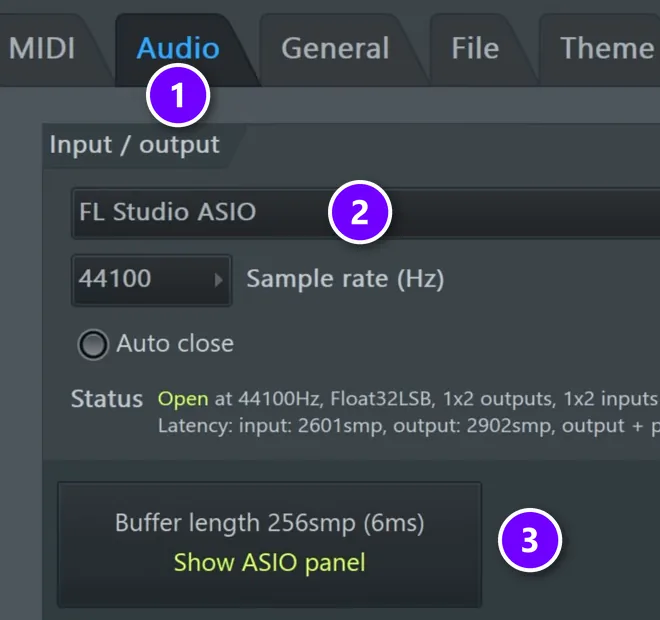
Open Options > Audio settings and go to the Audio tab (1). In the device menu (2), pick your interface’s ASIO driver. With a USB mic, choose its own driver if it has one, or FL Studio ASIO, which lets you pick the mic as your input. Then set the Buffer length (3) as low as your computer allows, so you hear yourself with less delay.
Still hear a lag? The tutorial’s fix is to record in a new, empty project, where your computer has less work to do.
Step 2: Pick a mono input
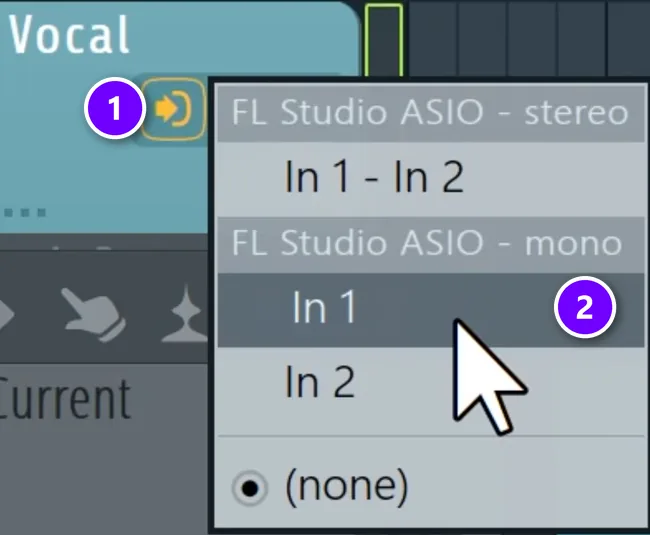
Right-click the + in the Playlist to add a track that’s linked to its own Mixer track. Click the track’s input icon (1) and choose a mono input (2), like In 1. Your voice comes from one mic, so always pick mono.
Step 3: Record dry, then mix
When FL Studio asks to switch the track to External input only, click yes. As Max says: “99% of the time you will want to record dry vocals.” Dry means no effects, so you can still change the EQ and reverb later. Right-click the record button, make sure audio recording is on, then click record and play.
How do you make a cheap mic sound finished?
Most of a finished vocal sound comes from the mix, not the mic: EQ to clean up mud and add air, compression to even out the level, then reverb and delay. That’s why a $119 condenser can end up on a real record.
Get the recording right first, though, because the mix can’t add what isn’t there. Max’s advice is to stay close, keep your distance steady and use a pop filter, so the recording has the low end and clarity you’ll want later.
Then mix it. Our vocal mixing guide walks you from the raw take to a finished vocal. If you’d rather start from a preset, Mix Elite’s Spirits vocal presets give you one-click vocal chains for rap, singing, adlibs and vocal effects in FL Studio, Ableton Live and Logic Pro, so a budget mic sounds mixed from the first playback.
When is it worth spending more than $200?
Upgrade when the mic is truly the weak link: your room is quiet, your takes are good, and you can hear what’s missing. A studio condenser like the RØDE NT1 5th Generation or a dynamic like the Shure SM7B is the usual next step. Our guide to the best microphones for singing compares 19 vocal mics, up to the Neumann Finneas used for Billie Eilish’s vocals.
Budget microphones side by side
| Mic | Price | Type | Connects by |
|---|---|---|---|
| Behringer XM8500 | $18.70 (Thomann) | Dynamic | XLR |
| FIFINE K669B | $36.99 | Condenser | USB |
| Behringer C-1 | $39 (Thomann) | Condenser | XLR |
| MXL 990 | $89.95 (Guitar Center) | Condenser | XLR |
| RØDE PodMic | $99 | Dynamic | XLR |
| Sennheiser e 835 | $99.95 | Dynamic | XLR |
| Samson Q2U | $99.99 (B&H) | Dynamic | USB-C + XLR |
| Shure SM57 | $109 (Guitar Center) | Dynamic | XLR |
| Audio-Technica AT2020 | $119 (Guitar Center) | Condenser | XLR |
| LEWITT LCT 240 PRO | $129 (Guitar Center) | Condenser | XLR |
| Audio-Technica AT2035 | $159 (Guitar Center) | Condenser | XLR |
| Shure MV7X | $199 (Guitar Center) | Dynamic | XLR |
| Logitech G Yeti | $139.99 | Condenser | USB |
| Audio-Technica AT2020USB-X | $169 (Guitar Center) | Condenser | USB-C |
| RØDE NT-USB+ | $179 | Condenser | USB-C |
Prices are list prices checked in November 2026: the makers’ own US stores where they sell direct, otherwise the store named. Several mics were on sale for less when we checked, and prices change, so compare before you buy.
DAY 5 OF THE 7-DAY MUSIC PRODUCER COURSE
Get the best recording setup for your budget
Day 5 of the 7-Day Music Producer Course starts with the best recording setup: setting up your room and the best recording equipment for every budget, plus a download with the best microphones for recording vocals. Then you record and mix your vocal with 10 copy-and-paste vocal processing chains. It’s taught in FL Studio (FL Studio’s free trial works), about 45 minutes a day, and it’s $27, with 60 days to decide if it was worth it.
Frequently asked questions
What is the best microphone under $100?
For singing in a normal room, the Sennheiser e 835 ($99.95) is the best microphone under $100 in this guide: a cardioid dynamic mic that ignores most room noise. For rap or podcasts, the RØDE PodMic ($99) is just as good a buy. In a quiet room, the MXL 990 ($89.95) is a condenser with a shock mount included. All three need an audio interface.
What is the cheapest microphone that is still good?
The Behringer XM8500 ($18.70 at Thomann in November 2026) is the cheapest XLR mic worth buying: a cardioid dynamic with a built-in pop filter, great for rap and noisy rooms. For a cheap condenser, the Behringer C-1 ($39) is the pick. If you have no audio interface, the FIFINE K669B ($36.99) plugs straight into USB.
Which budget mic helps with hollow, noisy vocals in an untreated room?
A dynamic mic, like the Sennheiser e 835 for singing or the RØDE PodMic and Shure MV7X for rap and speech. Dynamic mics pick up much less of the room than condensers. Sing close, hang a blanket or duvet behind you, and record in the room with the most soft things in it.
Why is an XLR mic better than a USB mic for music production?
Because you can grow it. A USB mic has the interface built in, so you can’t upgrade or swap one part, while an XLR mic plugs into an audio interface you keep as you change mics, add a second mic or connect studio speakers. For one voice on a laptop, USB is still the simpler start, and the Samson Q2U gives you both.
Is a cheap microphone good enough to release music?
Yes, if the room and the performance are good. Finneas told Sound On Sound that when he and Billie Eilish made “Ocean Eyes”, his setup included an AT2020 that cost $80. And Shure says Justin Vernon recorded his breakthrough Bon Iver album with a single SM57. Record in a quiet space and sing close.