

“To me, the first, the most interesting, the most capable musical instrument of all is the human voice.”
For most people singing at home, the best microphone for singing is a large condenser like the RØDE NT1 5th Generation ($249), as long as your room is quiet. In a noisy room or for rap, the Shure SM7B dynamic ($439) is the safer pick. Under $100, get the Sennheiser e 835 ($99.95) dynamic for a noisy room or the MXL 990 ($89.95) condenser for a quiet one.
You finally nail the take. Then you play it back, and your voice sounds thin, harsh or far away, nothing like the records you love. It’s easy to blame your voice. Most of the time, the mic, the room or where you stood is the real problem.
Below are 19 vocal mics, sorted the way people actually shop: by budget, by style, USB or XLR, and by the room you record in. We checked every price and spec in October 2026. You’ll also see what Billie Eilish, Michael Jackson and Frank Sinatra really sang into, plus the recording rules from Max, the founder of Mix Elite, for getting a clean vocal out of whichever mic you buy.
Table of Contents
What is the best microphone for singing at home?
At home, the best microphone for singing is usually a condenser. That’s the studio type. It runs on a little power from your audio interface, called phantom power, and it catches every breath and detail. In Mix Elite’s free 4.5-hour FL Studio course, Max says it plainly: “It’s best to use a specific type of mic called a condenser microphone. It’s the best for vocal recording because it picks up all the little nuances in your voice.”
The catch is that a condenser hears your room too. Echo, a fan or traffic all end up in the take. A dynamic mic mostly hears what’s right in front of it, so it forgives a bad room. That’s why stages and most podcasts use one.
There’s no single best mic for every voice, though. Max explains why in Mix Elite’s vocal balance video: “every microphone has a different frequency response. Think of it like a built-in EQ that your microphone applies to your voice whether you want it or not.” So a mic that flatters a deep voice can make a bright voice sound harsh. In the video below, he shows how that built-in EQ and your distance from the mic change a vocal.
Dynamic or condenser: which mic is better for vocals?
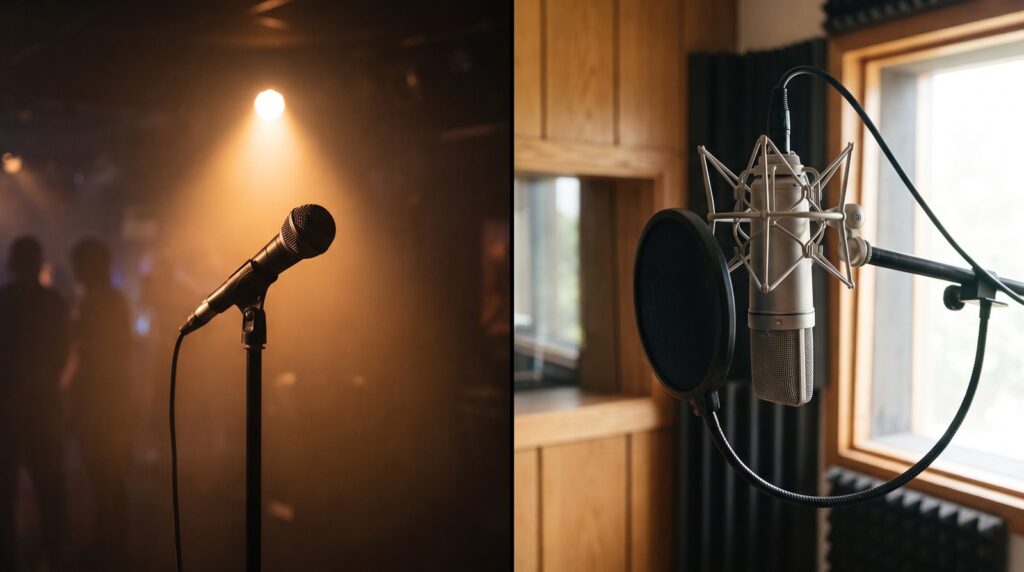
Both work. Condensers are the usual studio pick because they capture more detail, while dynamic mics win in noisy rooms and on stage because they mostly hear what’s right in front of them. The right one depends on where you sing and how quiet your room is. Here’s how they differ, in plain words:
- Condenser mics catch more detail and more high end. They also sound a bit brighter than dynamic mics out of the box. They need 48V phantom power, and they pick up the room.
- Dynamic mics are tough, need no power and ignore most of the room. They put out a weaker signal, so you turn the gain on your interface up further.
- In a quiet room, a condenser gives you the most open, detailed vocal.
- In a noisy or echoey room, a dynamic mic up close sounds cleaner than a condenser a foot away.
- On stage, use a dynamic. Loud speakers and drums would bleed into a condenser.
One more thing changes the sound: the proximity effect. The closer you sing, the more low end the mic picks up. If you sing too far away, you can’t add that body back later with EQ, because it was never recorded. Boosting it just adds mud, so stay close and keep the same distance.
Do you need a condenser mic as a beginner?
No. A condenser captures the most detail, which is why Mix Elite’s course recommends one for vocals, but it only pays off in a quiet room with little echo. If your room is noisy, or you also sing live, a dynamic mic is the better first buy, and plenty of classic records were made on one.
What to look for in a vocal mic
Spec sheets can look scary. For singing, only a few numbers and features really matter:
- Pickup pattern: a cardioid mic hears the front and rejects the back, which is what you want for one voice. Supercardioid is even tighter, which helps on loud stages.
- Connection: XLR mics plug into an audio interface, and USB mics plug straight into your computer. XLR gives you more choice and room to grow, and a few mics have both.
- Power: condenser mics need 48V phantom power, which almost every audio interface supplies with one button. Dynamic mics need no power, but quiet ones like the Shure SM7B need a lot of gain, so pair them with a strong interface or an inline booster.
- Self-noise: the faint hiss a condenser adds by itself. Lower is better, and it matters most for soft, breathy singing.
- A pad switch: it turns the mic down by about 10 dB, so loud belting doesn’t distort.
- What’s in the box: a shock mount (a cradle that stops bumps and stand noise) and a pop filter (a screen that stops the burst of air on P and B sounds) save you buying them separately.
- Your room: Mix Elite’s course teaches that quality starts with the space where you record. A quiet closet full of clothes does more for a vocal than a pricier mic in an echoey room.
Still putting the rest of your setup together? Our home studio setup guide shows what to buy first, from the interface to the headphones, and what can wait until later.
The best microphones for singing in 2026, by budget and room
The 19 picks below are grouped the way people shop for a vocal mic: by budget, by style, by connection and by the room you sing in. Each one says who it’s for, lists the specs that matter, and gives one honest catch and a price. Most prices come from the maker’s own US site in October 2026.
Neumann, Electro-Voice and MXL sell through dealers and show no price, and Audio-Technica’s store didn’t load for us that day. For those mics, and for Behringer’s C-1, we give a big retailer’s price from the same month and name the store.
Best overall microphone for home vocals
The best all-round microphone for singing at home is the RØDE NT1 5th Generation. It’s a quiet, detailed studio condenser with both XLR and USB, so it grows with you from a laptop to a full interface setup.
1. RØDE NT1 5th Generation
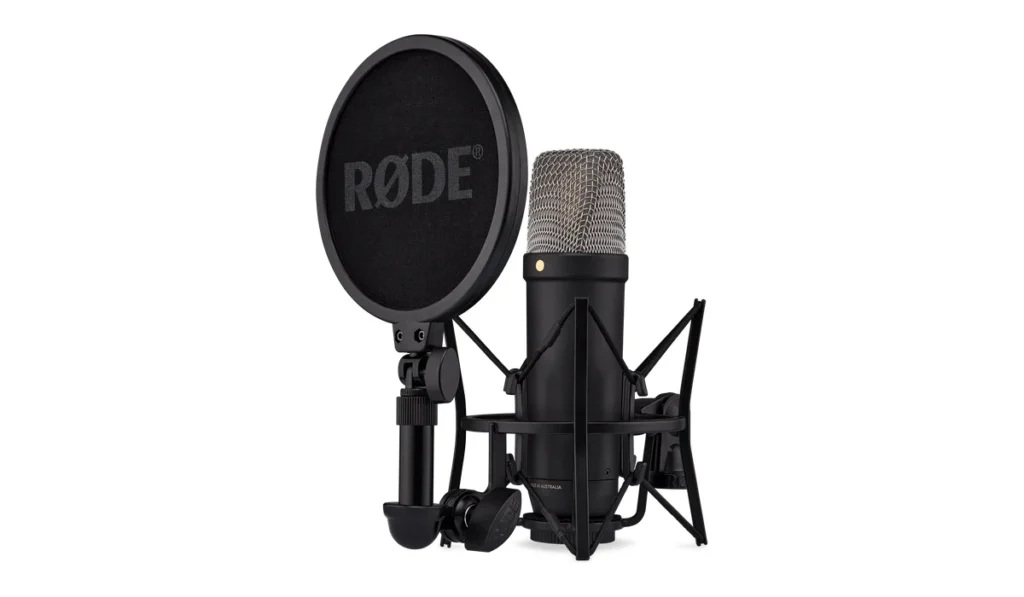
Who it’s for: singers buying their first serious mic, recording in a quiet room.
The 5th Generation NT1 has a twist most studio mics lack: it has both an XLR plug and a USB-C port. You can start without an audio interface and add one later. RØDE lists its self-noise at just 4 dBA, which means almost no hiss on soft, breathy vocals, and a shock mount and a pop filter come in the box, so you can record the day it arrives.
Looking for the older NT1-A? RØDE now lists the NT1-A under Legacy Products, and the NT1 5th Generation has taken its place.
Key specs: large-diaphragm condenser, cardioid, XLR and USB-C. Over XLR it needs 48V phantom power; over USB, your computer powers it.
The catch: like any condenser, it hears your room. In an echoey bedroom with a fan running, a dynamic mic will give you a cleaner take.
Price: $249 at RØDE (October 2026).
Best vocal mics under $100
Under $100 you can buy either type. A dynamic mic needs no power, shrugs off a noisy room and works on stage too. A budget condenser catches more detail and air for studio vocals, but it needs 48V phantom power and a quiet room. Here are two of each.
Want a USB mic, or a mic for podcasts or guitar? Our guide to the best budget microphones covers mics under $200 for every job, from podcasts to guitar, not only singing.
2. Shure PGA58
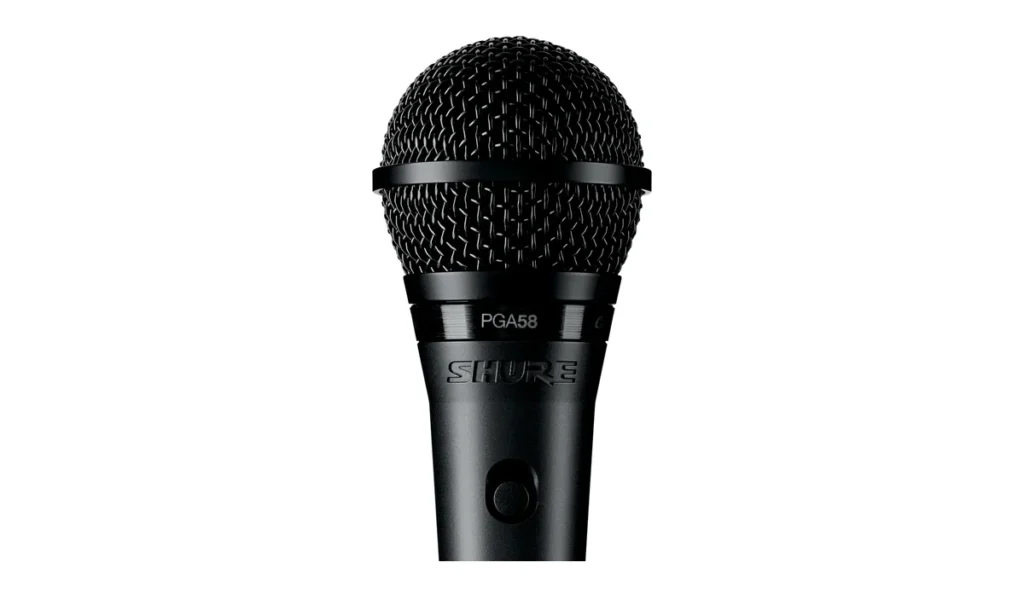
Who it’s for: the tightest budget, for singing at home, karaoke and open-mic nights.
The PGA58 is Shure’s entry-level vocal mic, made for lead and backup vocals. Its cardioid pattern picks up your voice and rejects unwanted noise around it. There’s an on/off switch on the handle, which is handy when you share a stage or a living room.
Key specs: dynamic, cardioid, XLR. No phantom power needed.
The catch: it’s a stage-style mic, so in the studio it catches less detail than a condenser. Sing close and turn your interface’s gain up.
Price: $75 at Shure, or $85 with an XLR cable (October 2026).
3. Sennheiser e 835
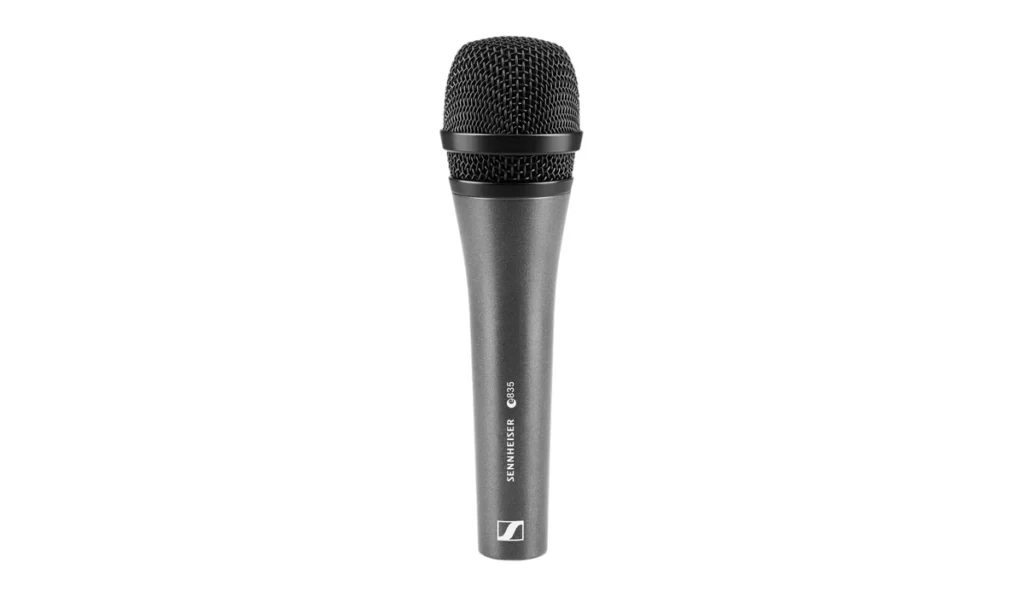
Who it’s for: singers who want the best vocal dynamic they can get for under $100.
The e 835 is Sennheiser’s everyday mic for lead and backing vocals. Sennheiser says its tight cardioid pattern keeps your voice clear and up front even when you move off to the side, and it lists a 40 to 16,000 Hz range. The housing is metal, and the 10-year warranty in the USA tells you how long it’s meant to last.
Key specs: dynamic, cardioid, XLR. No phantom power needed.
The catch: it’s a stage mic first. For airy, detailed studio vocals, a condenser like the NT1 Signature Series (#7) is the bigger step up.
Price: $99.95 at Sennheiser (October 2026).
4. Behringer C-1
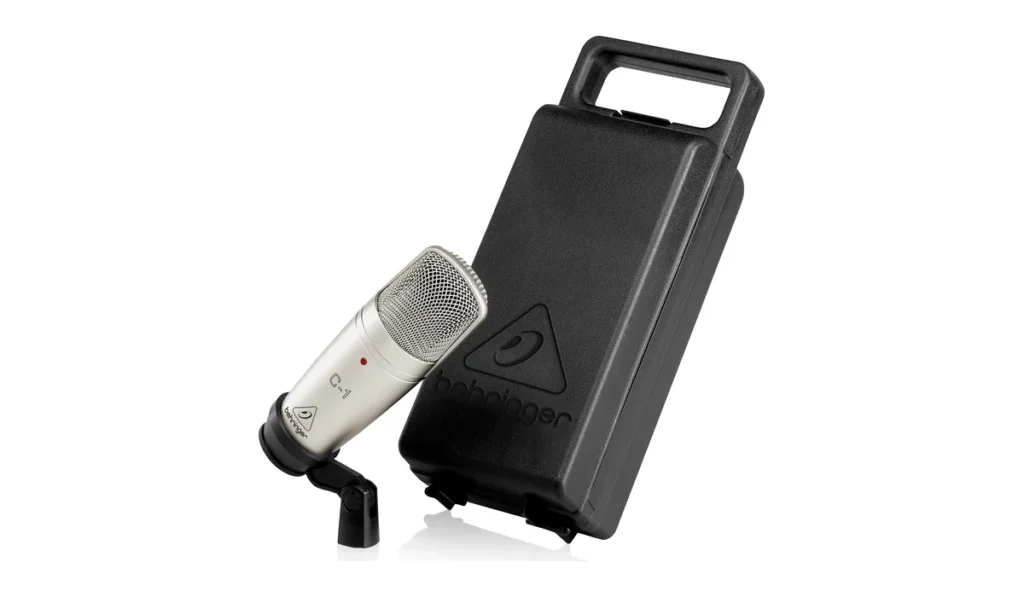
Who it’s for: singers on the tightest budget who want to try a studio condenser.
The C-1 is one of the cheapest studio condensers from a big brand. Thomann’s spec table lists a cardioid pattern, a 40 to 20,000 Hz range and 136 dB max SPL, so loud singing won’t overload it. A swivel stand adapter and a carrying case come with it.
Key specs: condenser, cardioid, XLR. Needs 48V phantom power.
The catch: there’s no shock mount, pad or low-cut switch, so stand bumps and floor rumble can reach the recording. Thomann also shows it in stock within 8 to 10 weeks, so check delivery before you count on it.
Price: $39 at Thomann, October 2026 (see it on Behringer‘s site).
5. MXL 990
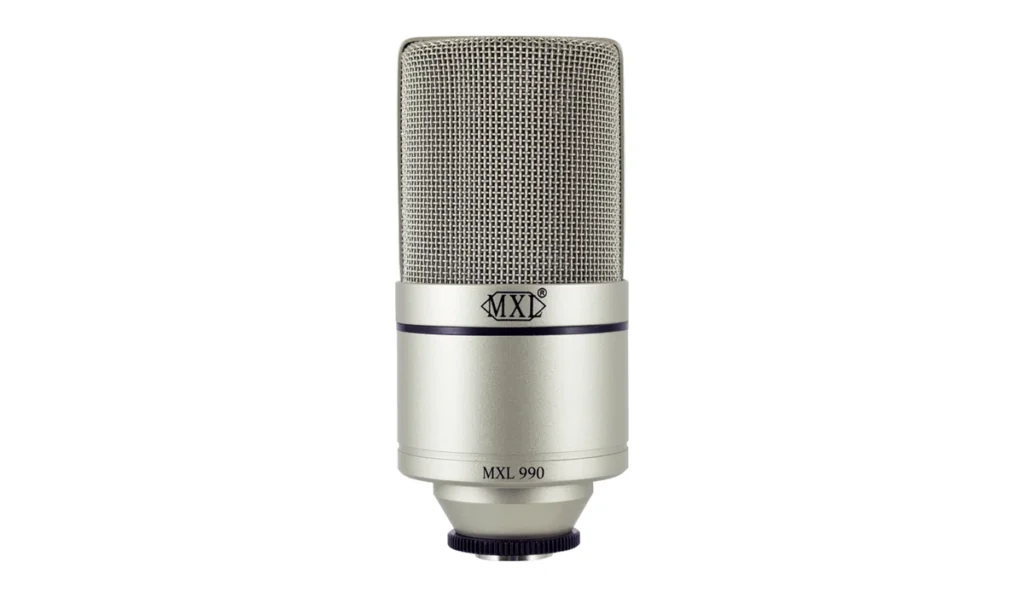
Who it’s for: beginners who want a real studio condenser, with a shock mount, for under $100.
MXL calls the 990 a classic entry-level condenser for vocals and says the design has been trusted in studios for decades. A shock mount, a stand adapter and a carrying case come in the box, and MXL lists a 20 Hz to 20 kHz range and 130 dB max SPL.
Key specs: condenser, cardioid, XLR. Needs 48V phantom power.
The catch: MXL lists its self-noise at 20 dB-A, against 4 dBA for the NT1 Signature Series (#7), so you may hear hiss under very soft singing. There’s no pop filter in the box, so add one.
Price: $89.95 at Guitar Center, October 2026 (MXL lists no price).
Best vocal mics under $300
Between $100 and $300 you can buy a real studio condenser or a top stage mic. The NT1 5th Generation above also fits this budget, and these three cover different needs.
6. Audio-Technica AT2020
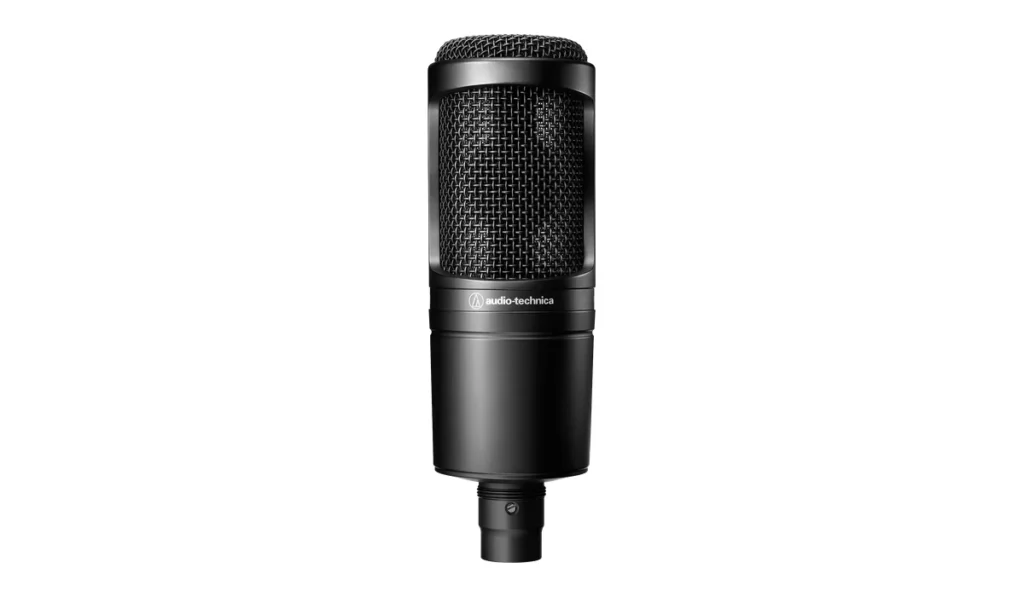
Who it’s for: singers who want a proven budget condenser and already own, or plan to buy, an audio interface.
The AT2020 is Audio-Technica’s entry studio condenser, and it’s the mic Finneas had in his setup when he and Billie Eilish made “Ocean Eyes” (more on that below). It has a cardioid pattern, a 20 Hz to 20 kHz range and a metal body, and a stand mount comes in the box.
Key specs: condenser, cardioid, XLR. Needs 48V phantom power.
The catch: it now costs a little over $100, and there’s no shock mount or pop filter in the box, only the stand mount.
Price: $119 at Guitar Center, October 2026 (see it on Audio-Technica‘s site).
7. RØDE NT1 Signature Series
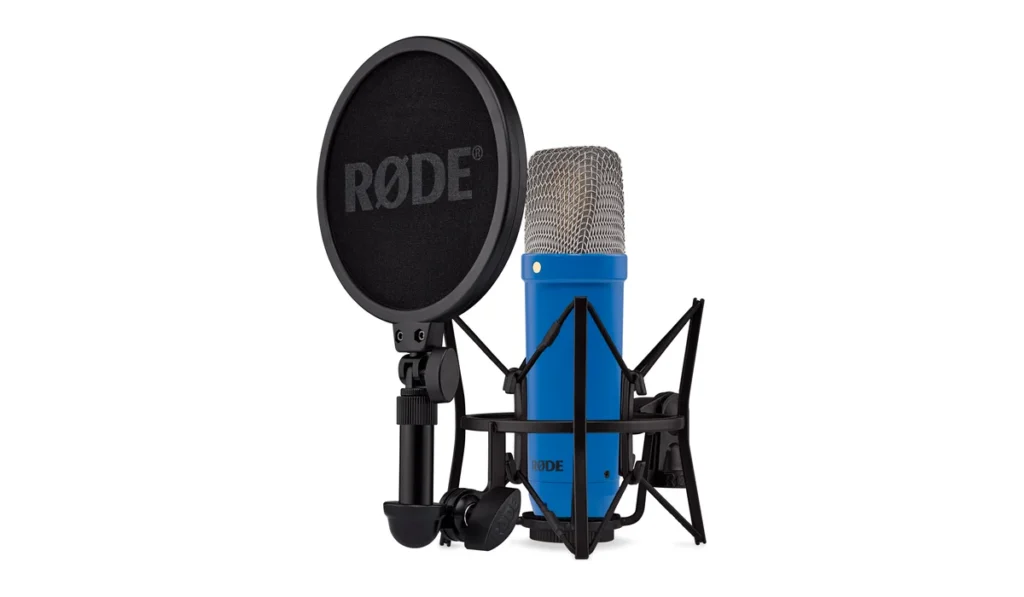
Who it’s for: singers who already own an audio interface and want the NT1 sound for less.
This is the XLR-only version of the NT1. RØDE uses the same HF6 1-inch capsule and lists the same 4 dBA self-noise as the 5th Generation, just without the USB port and the digital extras. You still get a shock mount, a pop filter and an XLR cable in the box, and it comes in black or a range of limited-edition colors.
Key specs: large-diaphragm condenser, cardioid, XLR only. Needs 48V phantom power from your interface.
The catch: there’s no USB, so it won’t plug straight into a laptop. Budget for an audio interface if you don’t have one yet.
Price: $159 at RØDE (October 2026).
8. Sennheiser e 945
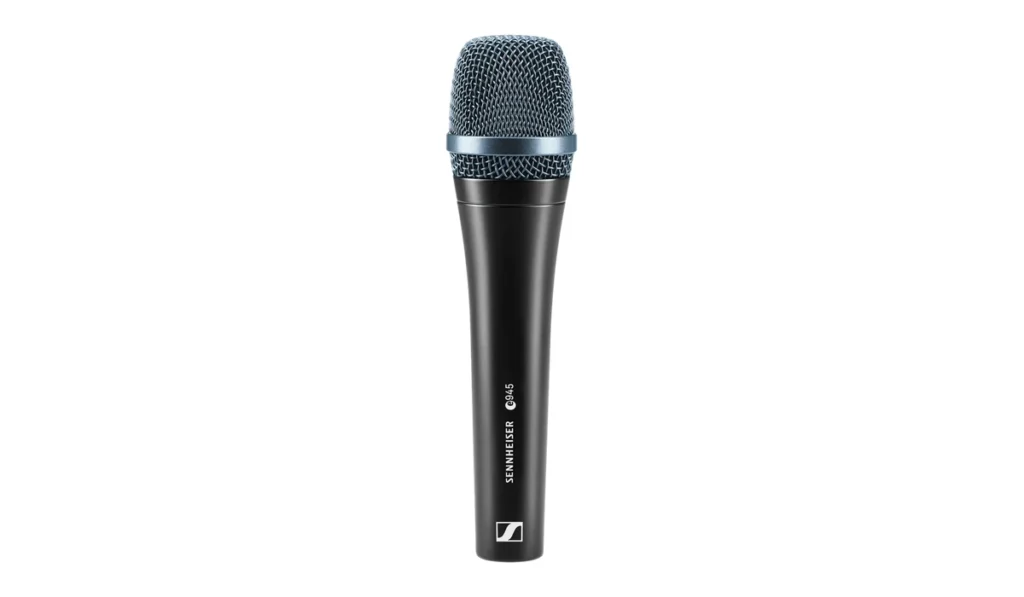
Who it’s for: singers who gig on loud stages, or who record in a loud room.
The e 945 is supercardioid, so it hears a narrower area in front of it than a cardioid mic. That helps on a loud stage and in a noisy room. Sennheiser lists a 40 to 18,000 Hz range, wider than the SM58’s 50 to 15,000 Hz, and backs it with a 10-year warranty in the USA.
Key specs: dynamic, supercardioid, XLR. No phantom power needed.
The catch: a supercardioid also hears a little from straight behind, so check where your wedge monitors sit on stage.
Price: $219 at Sennheiser (October 2026).
Best microphones for rap vocals
For rap, a dynamic mic used up close is the safest choice. It handles loud, punchy delivery, keeps room noise out, and gives you that close, in-your-face sound. The Shure SM7B is the classic pick, and its newer twin fixes its one weakness.
9. Shure SM7B
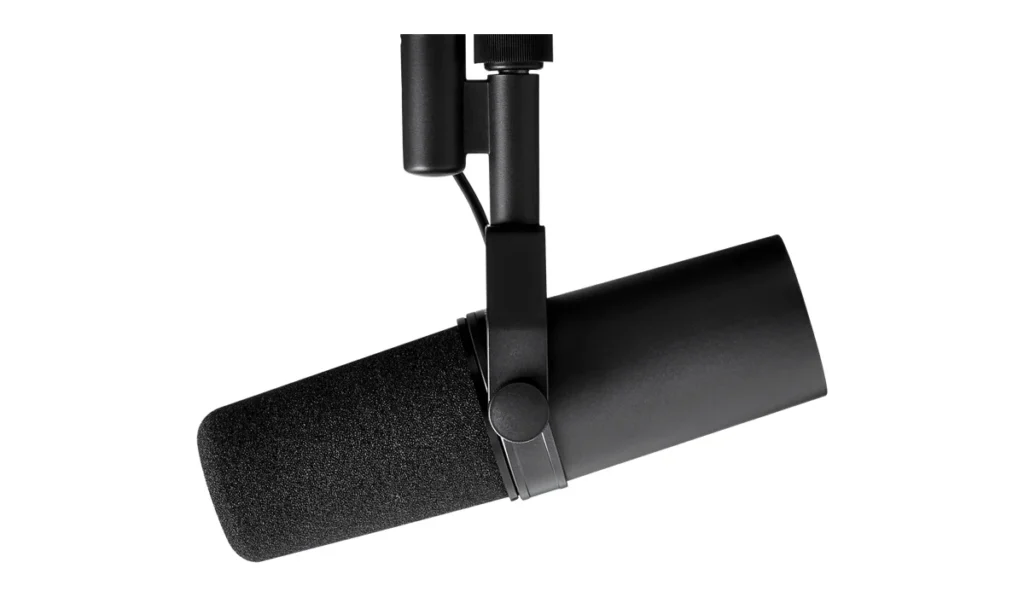
Who it’s for: rappers, and singers in untreated rooms, who record close to the mic.
The SM7B is a dynamic mic, so it shrugs off a bad room in a way no condenser can. Shure built in a bass roll-off and a presence boost, plus a thick windscreen that works as a pop filter, so you don’t need an extra one. Its ancestor, the original SM7, carried most of Michael Jackson’s vocals on Thriller.
Key specs: dynamic, cardioid, XLR. No phantom power, but it needs a lot of gain.
The catch: its signal is quiet. Shure now sells the SM7dB (#10) with a preamp built in for exactly that reason, so pair the SM7B with a strong interface or an inline booster.
Price: $439 at Shure (October 2026).
10. Shure SM7dB
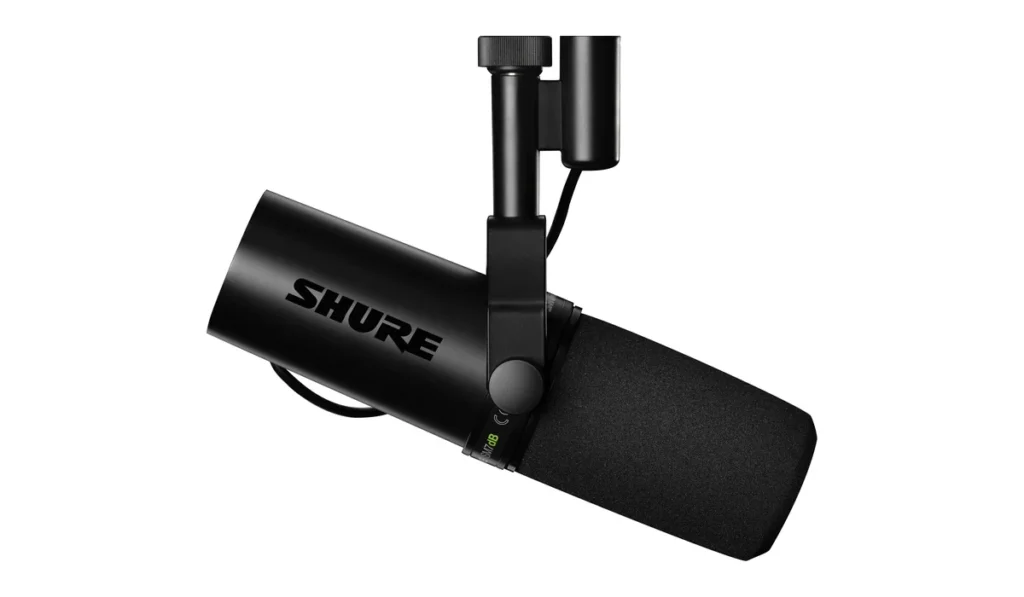
Who it’s for: rappers who want the SM7B sound with a small, budget interface.
The SM7dB is an SM7B with a preamp inside. A switch adds +18 dB or +28 dB of clean gain, so a budget interface no longer has to run flat out. Flip the switch to bypass, and it works like the original SM7B.
Key specs: dynamic, cardioid, XLR, built-in preamp. The preamp runs on 48V phantom power from your interface.
The catch: it costs $110 more than the SM7B. If your interface already has plenty of clean gain, the SM7B does the same job.
Price: $549 at Shure (October 2026).
Best microphones for singing
For singing, a large-diaphragm condenser gives you the most detail and air, as long as your room is quiet. These two are the step up from a first mic, with more room for loud voices and switches that fix common problems.
11. Audio-Technica AT4040
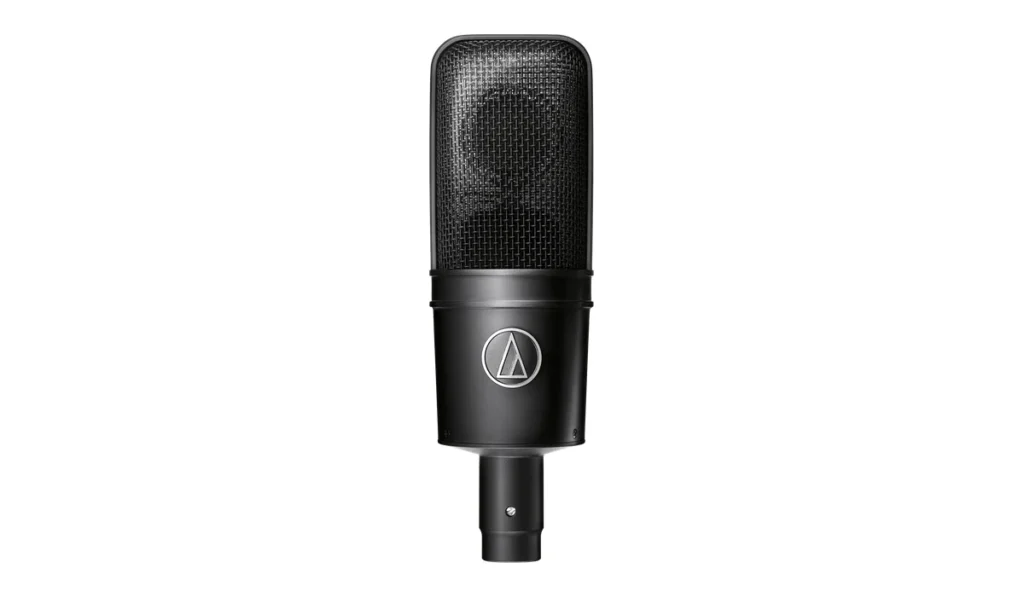
Who it’s for: singers who belt, and anyone whose room picks up rumble from traffic or footsteps.
The AT4040 has two switches that solve real problems: an 80 Hz low-cut that removes rumble, and a 10 dB pad for loud voices. Audio-Technica rates it at 145 dB SPL before it distorts, or 155 dB with the pad on. A shock mount comes with it.
Key specs: large-diaphragm condenser, cardioid, XLR. Needs 48V phantom power.
The catch: it costs $80 more than the NT1 5th Generation and has no USB, so it only makes sense if you need those switches or the extra headroom.
Price: $329 at Guitar Center, October 2026 (see it on Audio-Technica‘s site).
12. AKG C214
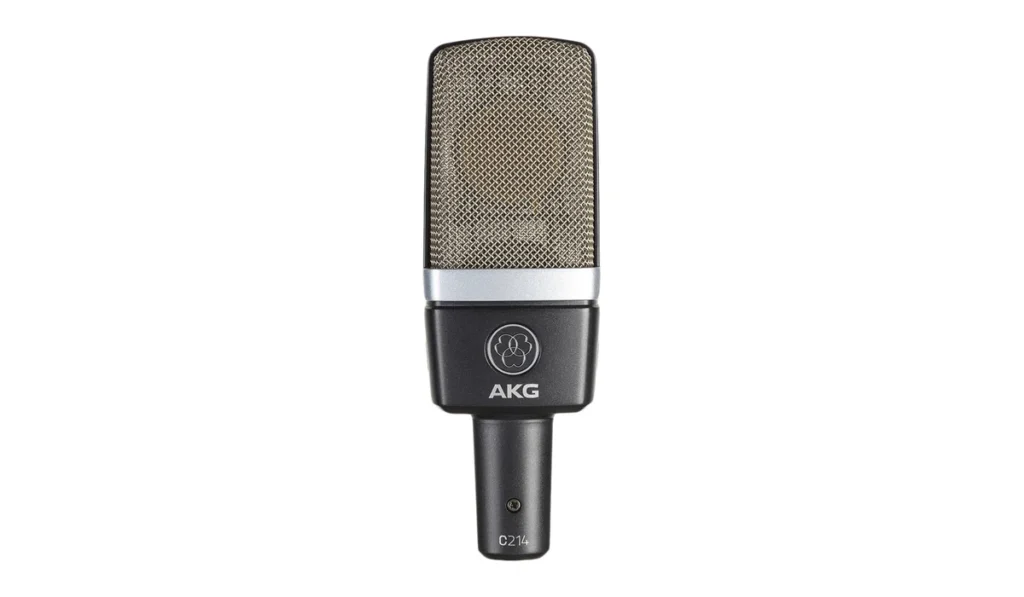
Who it’s for: singers who want a detailed, classic-sounding condenser for a quiet or treated room.
AKG describes the C214 as a lower-cost alternative to its well-known C414 XLII, with the same sonic character. It has a 20 dB pad for loud sources and a 160 Hz bass cut, and AKG lists its self-noise at 13 dB-A. A shock mount and a metal case come in the box.
Key specs: large-diaphragm condenser, cardioid, XLR. Needs phantom power; AKG lists 9 to 52 V, so any interface’s 48V works.
The catch: there’s no pop filter in the box, so add one. At $469, it also costs nearly twice as much as the NT1 5th Generation.
Price: $469 at AKG (October 2026).
Best USB microphones for singing (and when USB is enough)
A USB mic is enough when you record one voice at a time straight into a laptop. If you want to record two sources at once, like your voice and a guitar, or upgrade the mic later, get an XLR mic and an audio interface.
Hybrid mics with both plugs give you the best of both. The RØDE NT1 5th Generation (#1) and the Shure MV7+ let you start on USB today and move to an interface later without buying a new mic.
13. Shure MV7+
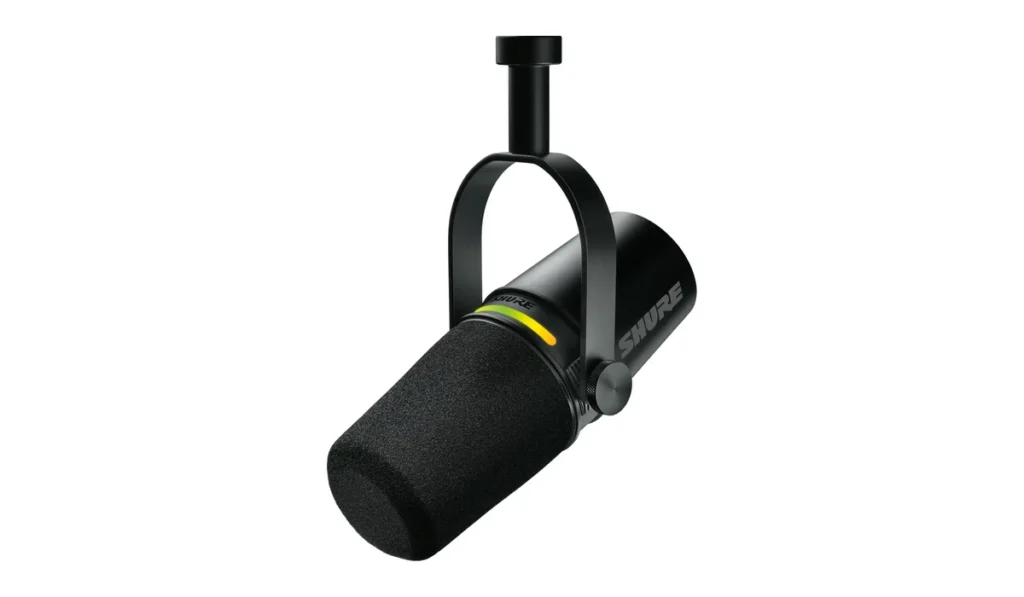
Who it’s for: singers and rappers who want one mic for vocals, streams and podcasts, plugged straight into a laptop or phone.
Shure says the MV7+ was inspired by the SM7B, and it markets it to musicians as well as podcasters. Over USB-C it adds Auto Level Mode, a real-time Denoiser that removes room noise, and a Digital Popper Stopper for harsh P and B sounds. A headphone jack lets you hear yourself with no delay.
Key specs: dynamic, cardioid, USB-C and XLR. No phantom power: USB powers it, and the XLR output is passive.
The catch: the clever processing only works over USB. Shure notes that XLR audio isn’t affected by the software settings, so through an interface it’s a plain dynamic mic.
Price: $299 at Shure (October 2026).
What is the best mic for singing in a room that isn’t soundproofed?
A dynamic mic, sung into from close up, like the Shure SM7B. It mostly picks up what’s right in front of it, so the room’s echo and noise stay out of your vocal. If you’d rather use a condenser, record in a spot with little echo, like a closet full of clothes, or put a small vocal booth around the mic.
That’s the trade-off Mix Elite’s course describes: a dynamic mic captures a little less detail, but you don’t need a perfect recording space. Whichever you choose, turn off fans and the AC, sing close, and keep the same distance for the whole take.
The SM7B (#9) and the e 945 (#8) both work well here. These two dynamic mics are made for exactly this job too.
14. Electro-Voice RE20
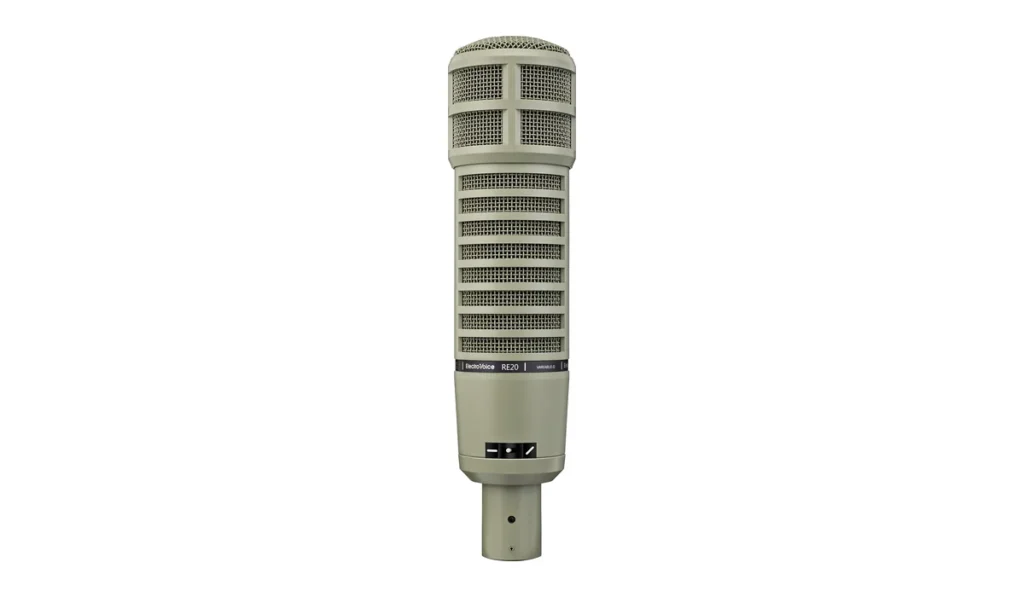
Who it’s for: singers and rappers who move around while they record, in a room with no treatment.
Electro-Voice calls the RE20 the mic that defined the sound of radio for generations. Its Variable-D design keeps your tone the same when you move on and off the mic, with no boomy bass when you get close. A blast and wind filter is built in, and a bass-tilt switch trims the low end.
Key specs: dynamic, cardioid, XLR. No phantom power needed.
The catch: its output is low. Electro-Voice lists 1.5 mV per pascal, against 23 mV for Neumann’s TLM 103 condenser, so you need an interface with lots of clean gain or a booster.
Price: $449 at Guitar Center, October 2026 (Electro-Voice lists no price).
15. Shure SM58
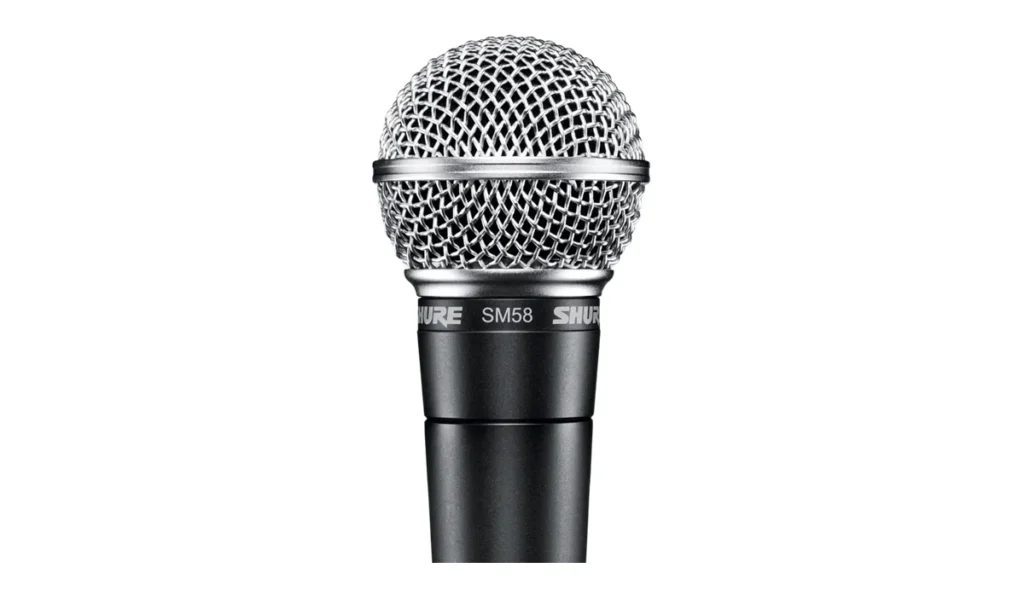
Who it’s for: almost any singer, at home or on any stage, on a budget just over $100.
Shure has made the SM58 since 1966 and designs it for live performance, sound reinforcement and studio recording. A built-in ball grille with a pop filter keeps out wind and plosives, and a pneumatic shock mount cuts handling noise. Nothing fancy, which is the point.
Key specs: dynamic, cardioid, XLR, 50 to 15,000 Hz. No phantom power needed.
The catch: its range stops at 15,000 Hz, so it sounds less airy than a condenser on a record. Sing close and keep the same distance.
Price: $109 at Shure, or $119 with an on/off switch (October 2026).
Best studio condenser mics for vocals
A high-end studio condenser pays off only in a quiet, treated room, because it records every detail of the space as well as your voice. The four below run from home studio to commercial studio. Neumann sells through dealers and lists no prices, so its three mics carry Guitar Center’s prices from October 2026.
16. Neumann TLM 102
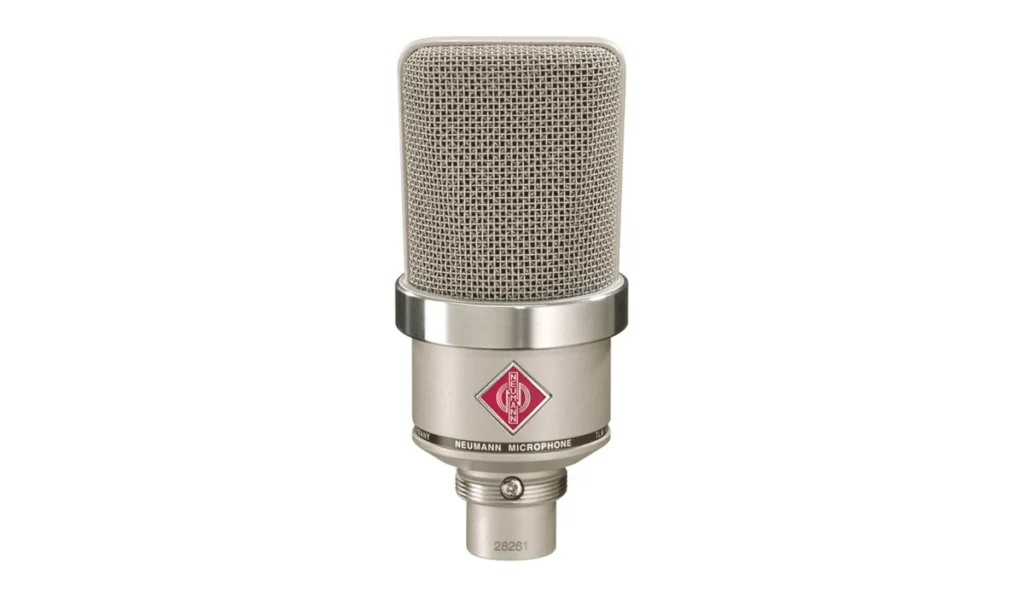
Who it’s for: home studio singers who want a Neumann without the TLM 103 price.
The TLM 102 is Neumann’s compact large-diaphragm mic. It has a gentle treble lift for silky highs and a pop screen built in, and it handles up to 144 dB SPL, so loud singers won’t overload it. Neumann calls it a joy to use, even for novices.
Key specs: large-diaphragm condenser, cardioid, XLR. Needs 48V phantom power.
The catch: its self-noise is 12 dB-A, against 7 dB-A for the TLM 103. You’ll only hear that on very soft, breathy vocals in a very quiet room.
Price: $799 at Guitar Center, October 2026 (Neumann lists no price).
17. Neumann TLM 103
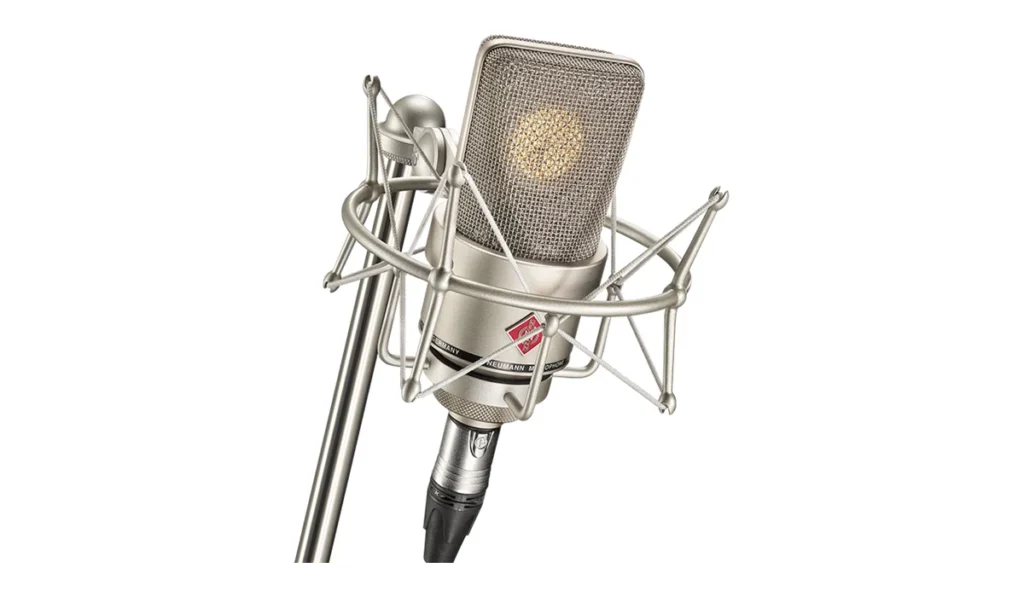
Who it’s for: singers who want a pro vocal sound in a quiet home studio.
Neumann derived the TLM 103’s capsule from the classic U 87 and gave it a wide presence boost above 5 kHz. Its self-noise is just 7 dB-A, so quiet, close vocals stay clean.
It’s also the mic Billie Eilish’s brother and producer, Finneas, named in a 2019 interview with Sound On Sound. He said he records everyone with that one mic.
Key specs: large-diaphragm condenser, cardioid, XLR. Needs 48V phantom power.
The catch: that presence boost can make an already bright or hissy voice sound sharp. Try it on your own voice first if you can.
Price: $1,295 at Guitar Center, October 2026 (Neumann lists no price).
18. AKG C414 XLII
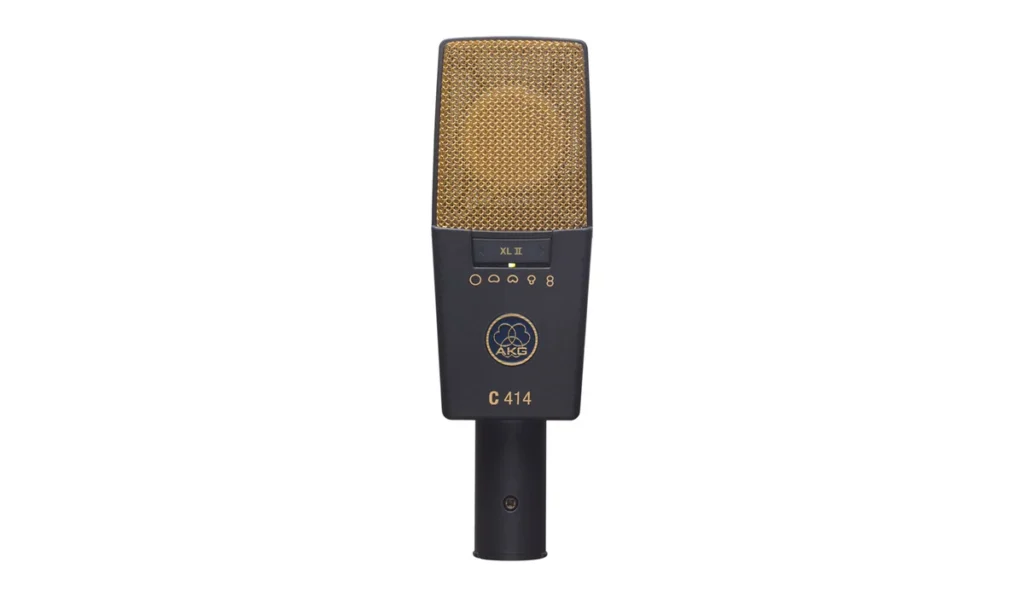
Who it’s for: singers who want one pro mic that also handles instruments, duets and room sound.
AKG says the C414 XLII’s slight presence boost and sense of space are similar to its legendary C12 from 1953. Nine polar patterns, three pads (-6, -12 and -18 dB) and three bass cuts (160, 80 and 40 Hz) let one mic cover almost any job, and AKG lists its self-noise at just 6 dB-A. A shock mount, a pop filter, a windscreen and a metal case come in the box.
Key specs: multi-pattern condenser (cardioid, wide cardioid, hypercardioid, omni, figure-8 and settings in between), XLR. Needs phantom power; AKG lists 44 to 52 V, so use your interface’s full 48V.
The catch: the presence boost can sound bright on an already sharp voice; the neutral C414 XLS costs the same and is the safer pick there. At $1,299, it also costs about five times the NT1 5th Generation.
Price: $1,299 at AKG (October 2026); the C414 XLS is also $1,299.
19. Neumann U 87 Ai
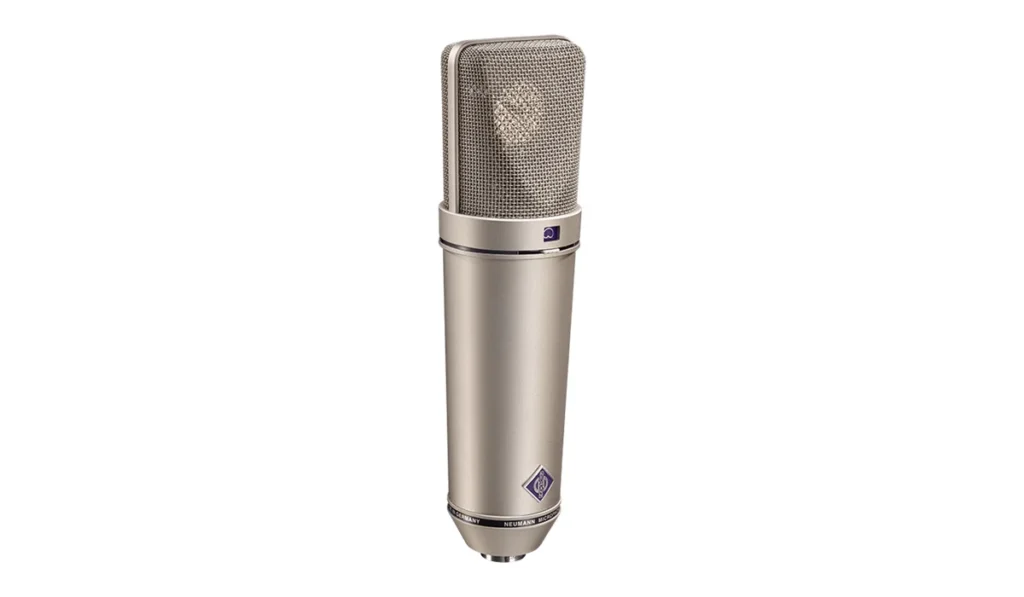
Who it’s for: singers with a treated studio and a big budget.
The U 87 Ai is a studio classic, and Neumann calls it the standard microphone for speech and vocals. It has three pickup patterns: cardioid for one singer, omni to capture the whole room, and figure-8 for two singers facing each other. Neumann adds a switchable low cut and a pad.
Key specs: large-diaphragm condenser, omni, cardioid or figure-8, XLR. Needs 48V phantom power.
The catch: Neumann rates it at 117 dB SPL in cardioid, or 127 dB with the pad, far below the TLM 103’s 138 dB, so loud singers need that pad. It also shows every flaw in your room.
Price: $3,750 at Guitar Center, October 2026 (Neumann lists no price).
Can one mic work for home recording and live singing?
Yes, if it’s a dynamic mic. Shure designs the SM58 ($109) for live performance, sound reinforcement and studio recording, so one mic can cover both. A condenser sounds more detailed at home, but on a loud stage it picks up the band and feeds back easily.
At home, a dynamic mic needs more gain from your audio interface, because its signal is weaker. Sing close and keep the same distance, and it can sound great on a record: Justin Vernon made Bon Iver’s breakthrough album with a single Shure SM57, Shure reports.
What microphones do famous singers use?
Famous singers use both kinds of mic. Michael Jackson sang most of his Thriller vocals into a Shure SM7 dynamic, Billie Eilish has recorded with a Neumann TLM 103 condenser, and on stage the Shure SM58 is the classic. Lots of mic lists guess, so we only list what the mic maker or a named interview confirms:
- Michael Jackson: producer Quincy Jones and engineer Bruce Swedien used a Shure SM7 for most of his vocals on Thriller (1982), Shure says. In his memoir, Swedien wrote: “One of my absolute favourite microphones is the Shure SM7.”
- Frank Sinatra: the famous “U 47” he used for most of his classics at Capitol Studio was really a U 48, a version with a figure-8 setting, according to Neumann.
- Billie Eilish: a Neumann TLM 103 in the studio and an sE Electronics V7 MC1 capsule on stage. The details and sources are in the next section.
- Roger Daltrey and Henry Rollins: the Shure SM58, in Shure’s artist story.
- Olivia Dean: also the SM58. Shure names her, Best New Artist at the 68th Grammys, among the new artists who rely on it in its newsroom.
- Justin Vernon of Bon Iver: a single Shure SM57 for his breakthrough album, Shure reports.
See the pattern? Classic records came from plain dynamic mics and from studio condensers alike. The singer, the room and the take matter more than the logo on the mic.
What mic does Billie Eilish use?
In the studio, Billie Eilish has recorded with a Neumann TLM 103. Her brother Finneas, who produces her songs, told Sound On Sound in July 2019 that he works with a Universal Audio Apollo 8 interface and a TLM 103. In his words: “I record everyone with the one microphone.”
It didn’t start there. When the two made “Ocean Eyes”, their breakthrough song, Finneas’s setup included an Audio-Technica AT2020 that cost him $80, as he said in the same interview.
On stage it’s a different mic. sE Electronics reported in 2022 that her front-of-house engineer, Drew Thornton, chose sE’s V7 MC1 capsule for her live vocals. It’s a supercardioid dynamic capsule that fits Shure wireless handhelds. The same report says Finneas used a wired sE V7. The lesson for your own vocals is simple: a quiet room and a close, steady distance matter as much as the mic.
How to get a pro vocal sound from any mic
This recording checklist from Mix Elite’s free FL Studio course takes five minutes and fixes most bad vocals:
- Pick a quiet room with little echo. Turn off fans and the AC. A closet full of clothes works well.
- Put the mic on a stand with a shock mount. Don’t hold it in your hand, especially a condenser.
- Find the front of the mic. Big condensers like the NT1 or TLM 103 take sound from the side, usually the side with the logo or a dot, not the top. As Max puts it: “You will not believe how many people I see do it wrong.”
- Set the mic at mouth level, one or two fists away, with a pop filter in between.
- Keep that distance for the whole take. Moving closer or farther changes the tone.
- Sing your loudest line and watch the input light on your interface. If it shows red, turn the gain down until it doesn’t.
Pro tip: closer means more bass. If your voice sounds thin, move in a little. If it sounds boomy or muddy, back off a few inches.
For more on mic placement and getting a great performance, see our vocal recording tips.
How to record your vocal in FL Studio
Once the mic is set up, recording takes three steps in FL Studio. These frames come from the recording lesson in Mix Elite’s free 4.5-hour FL Studio course.
Step 1: Pick your audio driver
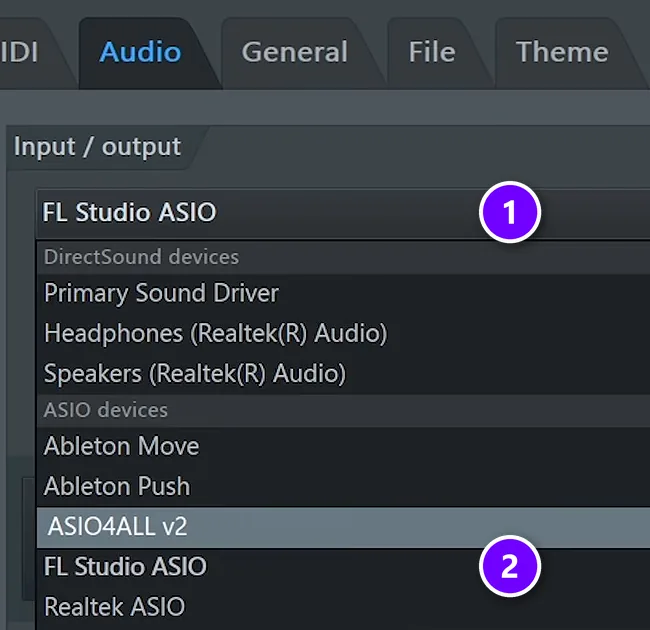
Open Options > Audio settings and click the device menu (1). Under ASIO devices (2), choose the driver with your interface’s name. If you don’t see one, FL Studio ASIO or ASIO4ALL will work.
Step 2: Record into the Playlist
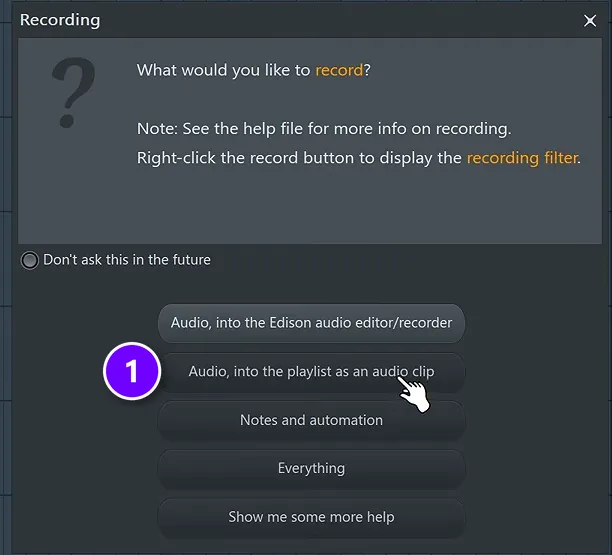
Click the record button. When FL Studio asks what you’d like to record, choose Audio, into the playlist as an audio clip (1). Your takes then land in the Playlist, ready to cut and arrange.
Step 3: Record it dry
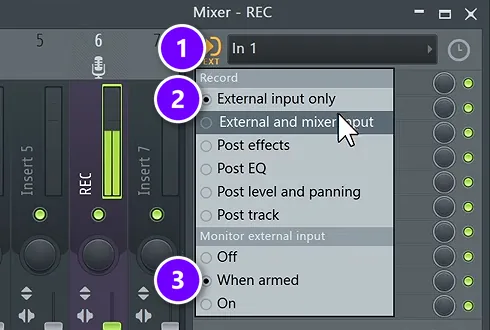
In the Mixer, pick your mic’s input on the vocal track (1) and set the record mode to External input only (2). That records your raw voice with no effects, so you can still change them later. Set Monitor external input to When armed (3) if you want to hear yourself while you sing.
For fixing latency, recording one line at a time and picking the best parts of each take, see our full guide to recording vocals in FL Studio. Then mix the take: our guide to mixing vocals walks you through EQ, compression and reverb.
Which vocal mic should you buy?
Match the mic to your room and your stage, not to the price tag:
- Quiet room, first real mic: RØDE NT1 5th Generation.
- Under $100: Sennheiser e 835 in a noisy room, or the MXL 990 condenser in a quiet one.
- Tightest budget: Behringer C-1 condenser or Shure PGA58 dynamic.
- You already own an interface: RØDE NT1 Signature Series or Audio-Technica AT2020.
- Rap: Shure SM7B, or the SM7dB if your interface is short on gain.
- Loud singer: Audio-Technica AT4040 or AKG C214.
- Laptop only, no interface: Shure MV7+, or the NT1 5th Generation over USB.
- Noisy or echoey room: Electro-Voice RE20 or Shure SM7B.
- Live gigs: Shure SM58, or the Sennheiser e 945 on loud stages.
- Pro studio: Neumann TLM 103 or AKG C414 XLII, or the U 87 Ai in a treated room.
Every XLR mic here also needs an audio interface, and our audio interface guide has picks for every budget. Add a stand and closed-back headphones, and you’re ready. Then sing the song through three or four times, because Mix Elite’s course says to always record a couple of takes, even if you think one was perfect.
DAY 5 OF THE 7-DAY MUSIC PRODUCER COURSE
Turn your new mic into a finished vocal
Day 5 of the 7-Day course covers the best recording setup and mixing vocals: setting up your room, the best recording equipment for every budget, a download with the best microphones for recording vocals, and 10 copy-and-paste vocal processing chains. It’s taught in FL Studio (the free trial works), about 45 minutes a day, and on day 7 a pro gives you feedback on your finished track. It’s $27, and you get 60 days to decide if it was worth it.
Frequently asked questions
What is the best mic for singing in an untreated room?
A dynamic mic sung into from close up, like the Shure SM7B ($439). It hears mostly what’s in front of it, so room echo and noise stay out of the take. With a condenser, record in a spot with little echo, like a closet full of clothes, or put a small vocal booth around the mic.
Do I need a condenser mic as a beginner?
No. A condenser captures the most detail, which is why studios use them for vocals, but it needs a quiet room and 48V phantom power from your audio interface. In a noisy room, or if you also sing live, a dynamic mic like the Shure SM58 ($109) or SM7B ($439) is the better first buy.
Can I use the same mic for recording and live singing?
Yes, with a dynamic mic. Shure designs the SM58 ($109) for live performance and studio recording, and Justin Vernon made Bon Iver’s breakthrough album on a single SM57. A condenser sounds more detailed at home, but it picks up the band and feeds back easily on a loud stage.
What microphones do famous singers use?
Michael Jackson sang most of his Thriller vocals into a Shure SM7, Frank Sinatra’s famous Capitol-era mic was really a Neumann U 48, and Billie Eilish has recorded with a Neumann TLM 103. On stage, the Shure SM58 is the classic: Shure names Roger Daltrey, Henry Rollins and Olivia Dean among the singers who use it.
How far should you sing from the microphone?
One or two fists away, with the mic at mouth level and a pop filter in between, is the rule in Mix Elite’s course. Closer gives you more low end, called the proximity effect, and farther gives you more room sound. Most important, keep the same distance for the whole take, so your tone stays even.